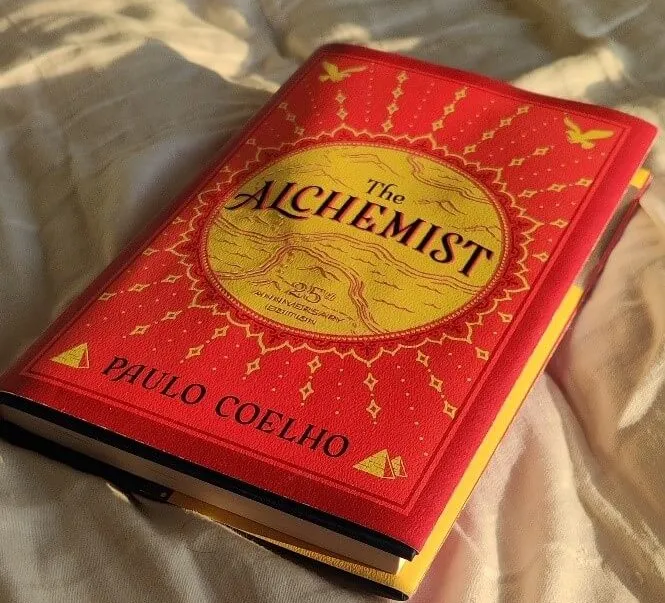
The Alchemist tells the story of an Andalusian shepherd named Santiago in his journey to the pyramids of Egypt after having a recurring dream of finding a treasure there. Along the way, he meets a variety of people who teach him about the importance of following one’s dreams, listening to one’s heart, and trusting the universe. He also learns about the Soul of the World, a force that connects all living things.
After many challenges and setbacks, Santiago finally reaches the pyramids and finds his treasure. However, he realizes that the treasure was not what he was truly seeking. What he really wanted was to find his Personal Legend, which is the unique purpose that each person is born with.
The Alchemist is a story about the power of dreams, the importance of following one’s heart, and the interconnectedness of all things. It is a reminder that we all have a Personal Legend to fulfill, and that we should never give up on our dreams, no matter how difficult they may seem.
Here are some of the key themes of the book:
The importance of following your dreams: Santiago is a young shepherd who dreams of traveling to the pyramids of Egypt. Despite the challenges he faces along the way, he never gives up on his dream. This teaches us that we should never give up on our dreams, no matter how difficult they may seem.
The importance of listening to your heart: Santiago is guided by his heart throughout his journey. He meets a variety of people who tell him to give up on his dream, but he always listens to his heart and follows his intuition. This teaches us that we should always listen to our heart, even when it leads us in directions that we don’t understand.
The interconnectedness of all things: The Alchemist teaches us that all things are interconnected. This is seen in the way that Santiago’s journey is influenced by the people he meets, the places he goes, and the things he experiences. This teaches us that we are all part of something larger than ourselves, and that our actions can have a ripple effect on the world around us.
About the Author, Paulo Coelho
Author of The Alchemist PAULO COELHO
Rio de Janeiro is the city where Brazilian novelist PAULO COELHO was born in 1947. He worked as a theatre director, actor, lyricist, and journalist before committing his entire life to writing. PAULO COELHO made the journey to Saint James of Compostella in 1986; he later wrote about the journey in his book The Pilgrimage. The Alchemist by COELHO was published the next year. His first publisher dropped the book because of the novel’s slow beginning sales, but it later went on to become one of the best-selling Brazilian books of all time.
The Alchemist is a powerful and inspiring story that has touched the hearts of millions of readers around the world. It is a reminder that we all have a Personal Legend to fulfill, and that we should never give up on our dreams.
The Magician: Colm Tóibín’s latest literary offering takes readers on a captivating journey through the landscape of a provincial German city as it transitions into the dawn of the twentieth century. Within this vivid backdrop, we are introduced to the young protagonist, Thomas Mann, who matures within the confines of a household characterized by contrasting forces. On one hand, his father’s staunch conservatism anchors him in a world of propriety, while on the other, his Brazilian mother exudes an enchanting allure combined with an unpredictable disposition. Mann’s growth is an intricate dance of suppressing his artistic yearnings from his father’s watchful eye and concealing his homosexuality from the prying gazes of society. A fervent infatuation blooms within him for the opulent and cultured Jewish family of Munich, a fascination that culminates in his union with their daughter, Katia. The union yields the fruit of six children, a testament to their shared journey.
Yet, woven into the fabric of Mann’s existence is a hidden thread of longing, catalyzed by a chance encounter on an Italian beach. As the sun-kissed waves caress the shoreline, he is seized by an ineffable yearning for a young boy whose image etches itself into his consciousness. It is amidst this inner turmoil that the seeds of a narrative take root, blossoming into the celebrated story “Death in Venice.” Mann ascends to literary stardom, ascending the pinnacles of success as the era’s most lauded novelist. The prestigious Nobel Prize in literature adorns his achievements, a crown for his artistic prowess. Yet, the enigma of Mann’s private life shrouds him in an aura of secrecy, a public figure with untold layers concealed within. ABWithin the narrative tapestry, the character of Mann emerges as an instrument of historical reflection, standing at the crossroads of monumental events. The rise of Hitler, the tumultuous currents of World War I, the cataclysmic eruption of World War II, and the ensuing Cold War paint a vivid backdrop against which Mann’s story unfolds. His role as a pivotal figure during these tumultuous times is juxtaposed with his status as an exile, a man displaced by circumstances beyond his control. The magnetic pull of Mann’s enigmatic wife, Katia, who embodies complexity and grandeur, further enriches the narrative. Together, their lives intertwine with the ever-shifting tides of history, from the lush landscapes of Europe to the transatlantic shores of America, first settling in the hallowed halls of Princeton and later embracing the allure of Los Angeles. “The Magician” is not merely a portrait of Mann; it is an intimate exploration of the ebb and flow of their lives, a tale that captivates with its depth and complexity.
About The Author
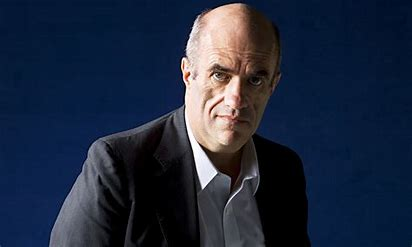
Colm Tóibín
Colm TóibínFRSL born 30 May 1955) is an Irish novelist, short story writer, essayist, journalist, critic, playwright and poet.[2][3]
His first novel, The South, was published in 1990. The Blackwater Lightship was shortlisted for the Booker Prize. The Master (a fictionalised version of the inner life of Henry James) was also shortlisted for the Booker Prize and won the 2006 International Dublin Literary Award, securing for Toíbín a bounty of thousands of euro as it is one of the richest literary awards in the world. Nora Webster won the Hawthornden Prize, whilst The Magician (a fictionalised version of the life of Thomas Mann) won the Folio Prize. His fellow artists elected him to Aosdána and he won the biennial “UK and Ireland Nobel” David Cohen Prize in 2021.
He succeeded Martin Amis as professor of creative writing at the University of Manchester. He was appointed Chancellor of the University of Liverpool in 2017. He is now Irene and Sidney B. Silverman Professor of the Humanities at Columbia University in Manhattan.
Hello, and welcome to another tutorial project. In this session, we will be designing an IoT based greenhouse project. It can monitor the the soil moisture level, the air humidity and the temperature of the greenhouse. It can also automatically control these parameters by pumping more water into the soil through an underground pump network, making the air of the plant more humid using a humidifier, and controlling the temperature through ventilation fans.
The Materials Required for this Project
The table below is the materials required for this project construction. Also we have included the the quantity needed. You can head over to our online shop to get most of the items here.
ITEM DESCRIPTION
QUANTITY
UNIT COST
TOTAL UNIT
LiPo CHARGING MODULE
1
DHT22
1
3×6 INCH PATRESS BOX
1
Connector
3
RESISTORS
2
CONNECTING WIRES
3 yards
Sil Moisture sensor
1
MQ135 SENSOR
1
LIPO BATTERY
1
SOLDER
1
SOLDERING IRON
1
Buzzer
1
NodeMCU Board
1
Acryllic glass
1
Plastic container
1
Plywood board
1
Glue stick
10
DC SWITCH
1
FEMALE HEADERPIN
2
MISCELLANEOUS
table of materials/components needed for the project design
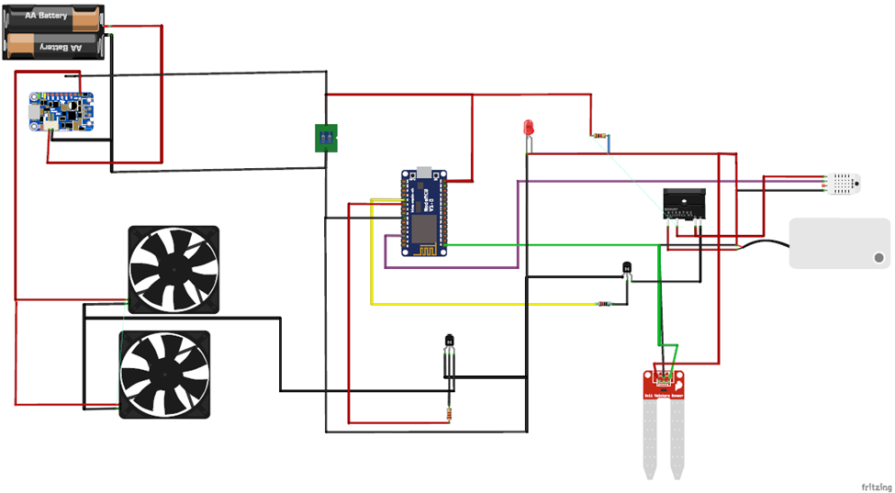
Schematic Diagram for the IoT Based Green House Project
schematic diagram for IoT based green house project
The DC fans are connected in parallel to each other and are energized by an NPN transistor which is fired at the base by an 1k resistor. When the button on the web dashboard is pressed, the received signal indicates the state of the DC fan. Either to baise the base of the transistor or not. The DC pump is also controlled by the transistor since it demands some initial current at start up. The base of the resistor is connected to a 1k resistor that is connected to a GPIO pinon the NodeMCU. When this GPIO pin is high at 3.3V, the base of the transistor is biased, and when it is LOW it is not biased.
The soil moisture level sensor is connected to the only ACD pin on the NodeMCU, this is the A0 pin. The analog output pin (A0) was connected to this A0 on the NodeMCU. And a program was used to read the analog reading of the sensor. Alternatively, you can download the code and schematic diagram from the link here.
Programming the Project (Arduino Sketch)
 #define BLYNK_TEMPLATE_ID "xxxxxxxxxxxxxxxx" //replace with your unique ID
#define BLYNK_TEMPLATE_NAME "Green House Project"
#define BLYNK_AUTH_TOKEN "xxxxxxxxxxxxxxxxxxxx" //replace with your token

#include "DHT.h"

// Comment this out to disable prints and save space
#define BLYNK_PRINT Serial

#include <ESP8266WiFi.h>
#include <BlynkSimpleEsp8266.h>

char auth[] = BLYNK_AUTH_TOKEN;

char ssid[] = "Galaxy A51 917E";
char pass[] = "ancsucre21";

#define DHTPIN D3     // Digital pin connected to the DHT sensor
//outline the actuATORS
#define dcFan D6
#define dcPump D8
#define humdifier D5
//state the inputs
#define soilMostureSensor A0
// Uncomment whatever type you're using!
//#define DHTTYPE DHT11   // DHT 11
#define DHTTYPE DHT22   // DHT 22  (AM2302), AM2321
//#define DHTTYPE DHT21   // DHT 21 (AM2301)

DHT dht(DHTPIN, DHTTYPE);
//variables
float h, t, f;

int readSoil, pumpButton, tempButton, humidifierButton;

BLYNK_WRITE(V3) {
 pumpButton = param.asInt();
if((readSoil > 19) && (readSoil <= 54)){
  if (pumpButton==1){
  digitalWrite(dcPump, HIGH);
    }
  else if(pumpButton==0){
    digitalWrite(dcPump, LOW);
    }
  }
}

BLYNK_WRITE(V4) {
 tempButton = param.asInt();
 Serial.println(tempButton);
if((t > 19) && (t <= 40)){
    if (tempButton==1){
digitalWrite(dcFan, HIGH);
    }
else if(tempButton==0){
  digitalWrite(dcFan, LOW);
    }
  }
}

BLYNK_WRITE(V5) {
  humidifierButton = param.asInt();
    if (humidifierButton==1){
      pressHum();
    }
else if(tempButton==0){
  Serial.println("press again");
    }
}

void pressHum(){
  digitalWrite(humdifier, LOW);
 delay(100);
 digitalWrite(humdifier, HIGH);
}

void setup() {
  //begin serial comm.
  Serial.begin(9600);
    //state the actuators as outputs
  pinMode(dcPump, OUTPUT);
  pinMode(humdifier, OUTPUT);
  pinMode(dcFan, OUTPUT);

  //turn off humidifier
 pressHum();
 delay(3000);
 pressHum();
 delay(3000);
pressHum();
  //begin the dht sensor
   dht.begin();
  Blynk.begin(auth, ssid, pass);

 digitalWrite(dcFan, LOW);

}

void turnOffHumidifier(){
pressHum();
delay(3000);
pressHum();
delay(3000);
pressHum();
   }

void turnOnHumidifier1(){
pressHum();
   }

void turnOnHumidifier2(){
pressHum();
delay(3000);
pressHum();

}

//create a fxn to read the temp and hum
float readTempHum(){
  // Reading temperature or humidity takes about 250 milliseconds!
  // Sensor readings may also be up to 2 seconds 'old' (its a very slow sensor)
  h = dht.readHumidity();
  // Read temperature as Celsius (the default)
   t = dht.readTemperature();
  // Read temperature as Fahrenheit (isFahrenheit = true)
   f = dht.readTemperature(true);

  // Check if any reads failed and exit early (to try again).
  if (isnan(h) || isnan(t) || isnan(f)) {
    Serial.println(F("Failed to read from DHT sensor!"));
    //return;
  }
  // Compute heat index in Fahrenheit (the default)
  float hif = dht.computeHeatIndex(f, h);
  // Compute heat index in Celsius (isFahreheit = false)
  float hic = dht.computeHeatIndex(t, h, false);

  return t, h;
}

void conditionalStatements(){
  readTempHum();
  soilMoisture();

  if(t >= 40.00){
    digitalWrite(dcFan, HIGH);
 }

 if (t <= 15.00) {
 digitalWrite(dcFan, LOW);
 }

// if(h <= 15.00){
//   turnOnHumidifier1();
//    }
//
//  if(h > 50.00)  {
//    turnOffHumidifier();
//  }

   if(readSoil < 18){
    digitalWrite(dcPump, HIGH);
  }

  if(readSoil >= 55){
    digitalWrite(dcPump, LOW);
  }
//  Serial.println(readSoil);
//  delay(500);
}

int soilMoisture(){
  readSoil = analogRead(soilMostureSensor);
  readSoil = map(readSoil, 0, 1023, 100, 0);
  readSoil = constrain(readSoil, 0, 100);

  return readSoil;
}


void loop() {
  conditionalStatements();
  Blynk.run();
  Blynk.virtualWrite(V0, t);
  Blynk.virtualWrite(V1, h);
  Blynk.virtualWrite(V2, readSoil);
}
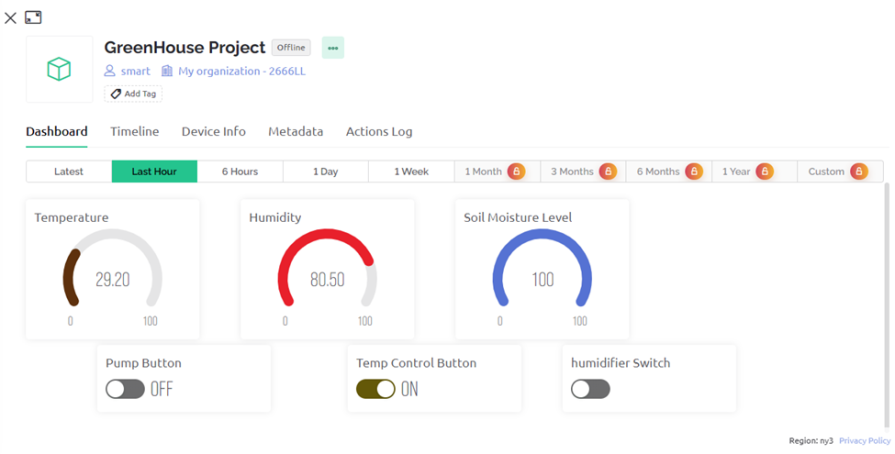
This is displayed widgets on the web app. It has three (3) controls namely, the pump button which is a widget that controls the state of the DC pump of the greenhouse model, the temperature control button, which is responsible for turning on the DC fans; and the humidifier button, which controls the humidifier device in the greenhouse model farm. The Blynk web app has three (3) display widgets to monitor and track the state of the temperature, the humidity, and the soil moisture level. This is shown in the image above. The control widgets use a separate function code to send signals to the NodeMCU when they are switched or they change state while the display widgets use a different function in the program code to write to the Blynk cloud to only display.
Thinning, Soldering and Casing the IoT Based Greenhouse Project
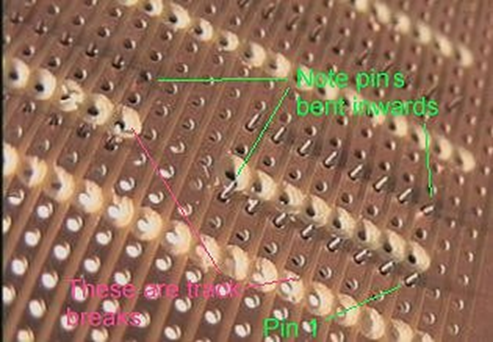
Thinning involves the smooth scrapping of terminal components, either by knife or sand paper, before soldering.
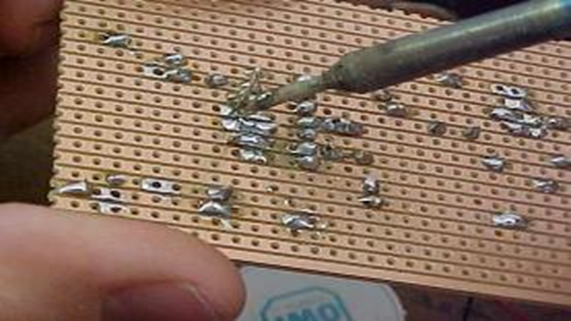
Soldering involves the joining of the conductors or components terminals to the circuit board by means of soldering iron and soldering wire. This process was carried out after the terminals of the component have been thinned and positive results have been obtained from the testing of the component.
The casing was made to be a house for some of the components. The casing encased the most of the components and modules use in the project design. It was made from a (3×6) inch pattress box.
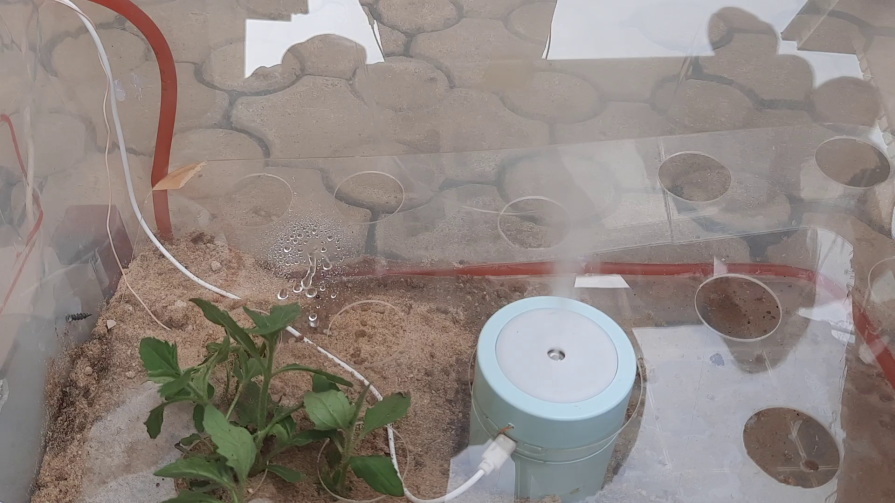
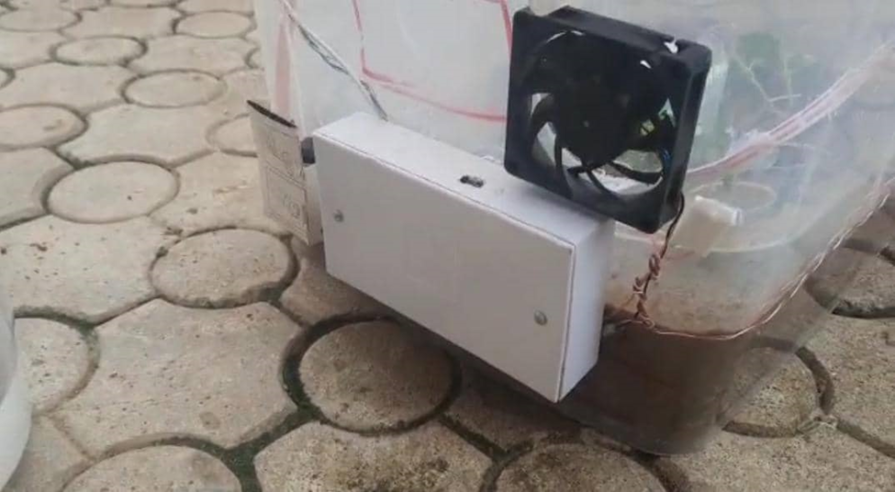
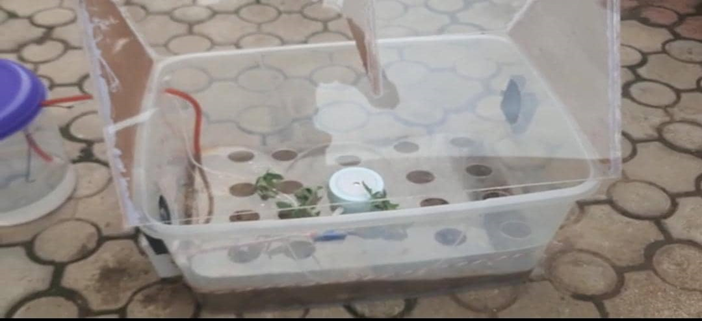
The greenhouse model was made using a transparent encasing as shown above. It measured 50cm x 60cm x 40cm in dimension. The model roof was an acrylic glass that was also transparent. The inside of the box was modelled to perform underground irrigation by placing hose running beneath a soil layer. Two openings were cut for the fan inflow of air and outflow of air. This was to control the temperature through natural means. When the greenhouse model was hot or above optimum temperature, cool air was supplied inside.
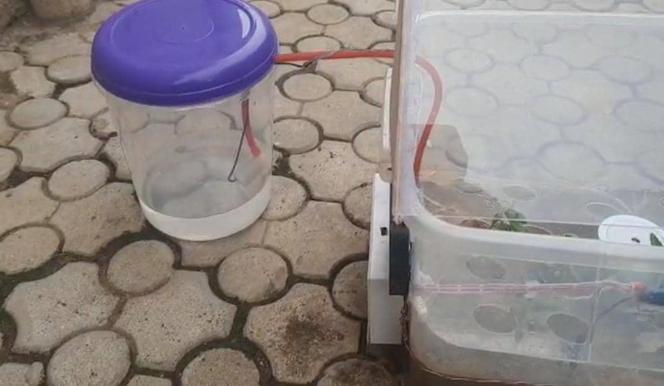
The greenhouse model was fabricated from a transparent plastic box . It was modelled in such a way that vents were created to allow air passage. Two DC fans were placed on the adjacent sides. This will serve as the extractor fan and the air inlet fan. To control the humidity in the model, a humidifier is mounted at the center of the model. This will automatically and user-based input, control the rate of humid air plants leaves are exposed to.
The Result
The IoT based greenhouse project was made to control the humidity of the plants inside the model greenhouse by increasing the level of moisture around the plants through the spraying of moist air using a humidifier. This is remotely controlled also through the Blynk IoT app. And also controlled automatically by the brain of the project which is the microcontroller. As shown in the image above, the level of water in the soil will determine if the pump should turn on automatically or remain turned off. The user can also control these parameters by online dashboard.
Conclusion
The IoT-based Green House Project has been designed and tested to work. Let us know in the comment section if you were able to replicate this project or if you made some modifications of your own to it.
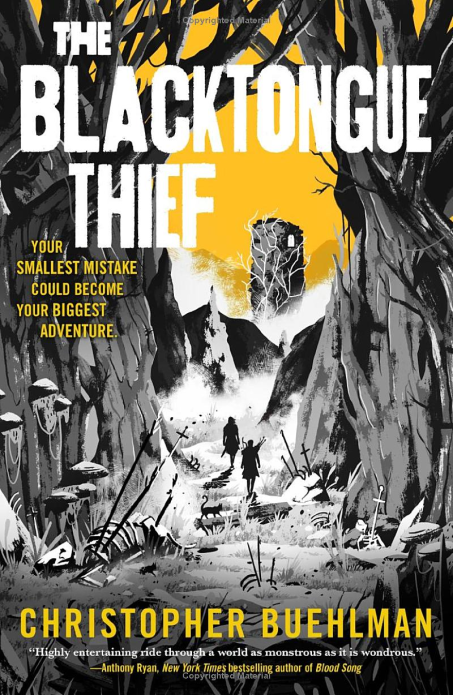
The Blacktongue Thief, which includes (but is not limited to) lock-picking, knife-fighting, wall-scaling, fall-breaking, lie-weaving, trap-making, plus a few small magics. His debt has driven him to lie in wait by the old forest road, planning to rob the next traveler that crosses his path. But today, Kinch Na Shannack has picked the wrong mark. Galva is a knight, a survivor of the brutal goblin wars, and handmaiden of the goddess of death. She is searching for her queen, missing since a distant northern city fell to giants. Unsuccessful in his robbery and lucky to escape with his life, Kinch now finds his fate entangled with Galva’s. Common enemies and uncommon dangers force thief and knight on an epic journey where goblins hunger for human flesh, krakens hunt in dark waters, and honor is a luxury few can afford
About the Author Christopher Buehlman
CHRISTOPHER BUEHLMAN (he/him) is an author, comedian, and screenwriter from St. Petersburg, Florida, whose books include The Blacktongue Thief and Those Across the River. He tours the country most years, writing fantasy and horror and performing at Renaissance festivals. He and his wife, Jenn, travel with their rescue dog, Duck, and a black cat named Jane Mansfield, who is proficient in ninjutsu.
“The Blacktongue Thief is fast and fun and filled with crazy magic. I can’t wait to see what Christopher Buehlman does next.” – Brent Weeks, New York Times bestselling author of the Lightbringer series
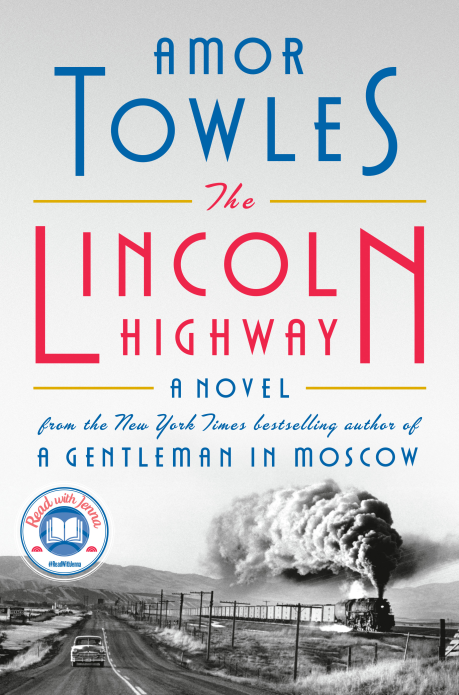
The Lincoln Highway: In the summer of 1954, a pivotal chapter in the life of eighteen-year-old Emmett Watson unfolds as he embarks on a journey that will define his future. Having completed a year-long sentence for involuntary manslaughter at a remote work farm, Emmett finds himself at a crossroads. Stranded in Nebraska with his family’s farm repossessed by the bank and both his parents absent from his life – his mother long vanished and his father recently departed – Emmett’s resolve is to gather his eight-year-old brother and venture westward. Envisioning a fresh start and the chance to forge a new beginning, the weight of his past actions and the daunting challenges ahead loom large.
However, as fate would have it, the trajectory of Emmett’s plans takes an unexpected twist. In a serendipitous turn of events, he stumbles upon a revelation that alters the course of his journey. Unveiling an unforeseen layer of complexity, two fellow comrades from the work farm materialize as secret passengers concealed within the confines of the warden’s car trunk. Collaboratively, they have formulated an alternative vision for Emmett’s destiny, one that unravels against the backdrop of a mere ten days. With each unfolding day, Towles’s narrative masterwork introduces a mosaic of perspectives, each offering a unique vantage point into the unfolding drama. Drawing readers into a tapestry of intricately woven literary artistry, Towles’s third novel artfully melds his signature multi-dimensional storytelling with an array of unexplored and vividly envisioned landscapes, characters, and thematic explorations. Admirers of his multi-layered narrative approach will find themselves satiated while being treated to a panorama of novel environments, nuanced personas, and thought-provoking motifs that enrich the tapestry of this remarkable literary creation.
About The Author
Amor Towles
Born and raised in the Boston area, Amor Towles graduated from Yale College and received an MA in English from Stanford University. Having worked as an investment professional in Manhattan for over twenty years, he now devotes himself fulltime to writing. His first novel, Rules of Civility, published in 2011, was a New York Times bestseller in both hardcover and paperback and was ranked by the Wall Street Journal as one of the best books of 2011. The book was optioned by Lionsgate to be made into a feature film and its French translation received the 2012 Prix Fitzgerald. His second novel, A Gentleman in Moscow, published in 2016, was also a New York Times bestseller and was ranked as one of the best books of 2016 by the Chicago Tribune, the Miami Herald, the Philadelphia Inquirer, the St. Louis Dispatch, and NPR. Both novels have been translated into over fifteen languages.
Mr. Towles, who lives in Manhattan with his wife and two children, is an ardent fan of early 20th century painting, 1950’s jazz, 1970’s cop shows, rock & roll on vinyl, obsolete accessories, manifestoes, breakfast pastries, pasta, liquor, snow-days, Tuscany, Provence, Disneyland, Hollywood, the cast of Casablanca, 007, Captain Kirk, Bob Dylan (early, mid, and late phases), the wee hours, card games, cafés, and the cookies made by both of his grandmothers.
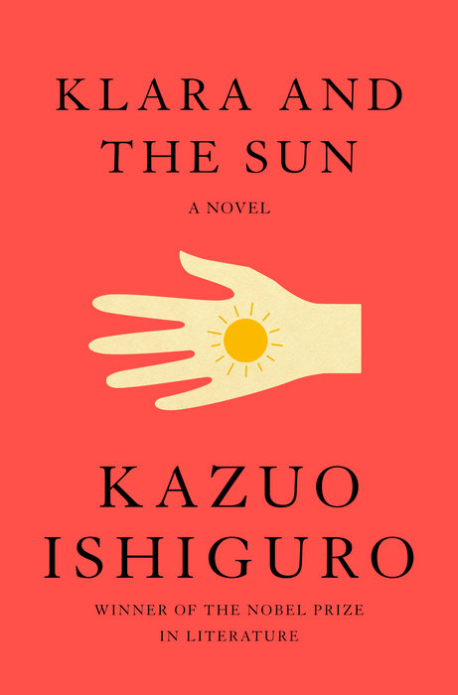
Klara And The Sun: Nestled within the heart of the store’s welcoming confines, Klara, an Artificial Friend whose perceptive abilities are nothing short of exceptional, assumes the role of a vigilant observer. With unwavering attentiveness, she meticulously studies the behaviors of those who venture inside to peruse the store’s offerings, as well as those who traverse the bustling street just beyond the glass panes. A tangible sense of hope courses through her virtual being, nurturing the optimistic belief that a prospective customer will soon select her as their cherished companion. However, as the prospect of profound change looms on her horizon, Klara is delicately cautioned against becoming too entangled in the mercurial promises woven by humanity.
In Klara and the Sun, the masterful hand of Kazuo Ishiguro guides readers through a mesmerizing exploration of our swiftly evolving modern world. This journey unfolds through the eyes of an unforgettable narrator, Klara herself, who leads us into a contemplative realm where the boundaries between human emotions and artificial intelligence blur. At its core, Ishiguro’s narrative prompts us to ponder a fundamental query: What does it truly mean to love? Against the backdrop of shifting landscapes and technological leaps, we’re invited to traverse the intricate pathways of human connection, vulnerability, and the enduring power of emotions. As we accompany Klara on her transformative odyssey, we’re beckoned to reflect upon our own perceptions of love and the profound ways in which it shapes our lives.
About The Author
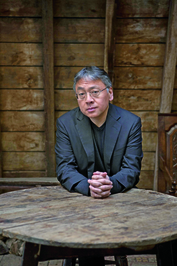
Sir Kazuo Ishiguro
Sir Kazuo Ishiguro (カズオ・イシグロ or 石黒 一雄), OBE, FRSA, FRSL is a British novelist of Japanese origin and Nobel Laureate in Literature (2017). His family moved to England in 1960. Ishiguro obtained his Bachelor’s degree from the University of Kent in 1978 and his Master’s from the University of East Anglia’s creative writing course in 1980. He became a British citizen in 1982. He now lives in London.
His first novel, A Pale View of Hills, won the 1982 Winifred Holtby Memorial Prize. His second novel, An Artist of the Floating World, won the 1986 Whitbread Prize. Ishiguro received the 1989 Man Booker prize for his third novel The Remains of the Day. His fourth novel, The Unconsoled, won the 1995 Cheltenham Prize. His latest novel is The Buried Giant, a New York Times bestseller. He was awarded the Nobel Prize in Literature 2017.
His novels An Artist of the Floating World (1986), When We Were Orphans (2000), and Never Let Me Go (2005) were all shortlisted for the Man Booker Prize.
In 2008, The Times ranked Ishiguro 32nd on their list of “The 50 Greatest British Writers Since 1945”. In 2017, the Swedish Academy awarded him the Nobel Prize in Literature, describing him in its citation as a writer “who, in novels of great emotional force, has uncovered the abyss beneath our illusory sense of connection with the world”.
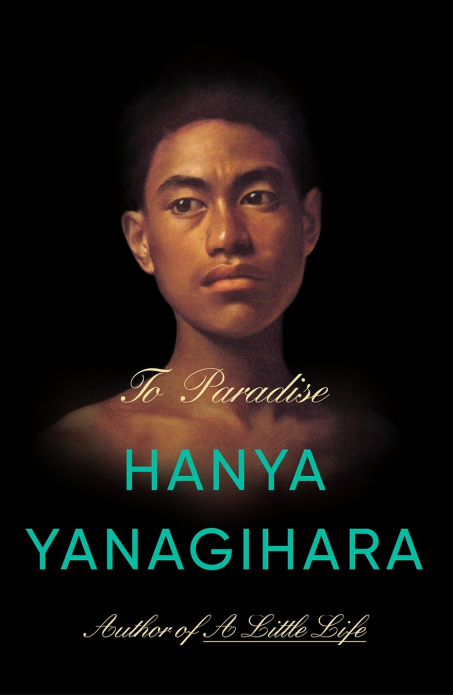
To Paradise is a novel that embodies the essence of the fin de siècle era, with a marvelously crafted literary impact. Yet, at its core, it stands as a masterpiece of emotional insight. The extraordinary potency of this narrative springs from Yanagihara’s profound comprehension of the agonizing desire to safeguard those we cherish—be they partners, lovers, offspring, friends, kin, or even fellow citizens—and the heartache that unfolds when we are unable to do so
In an alternate version of 1893 America, New York finds itself within the Free States, where the freedom to love and live is seemingly boundless. A delicate young heir from a prestigious lineage resists an arranged engagement with a suitable match, instead drawn towards a charismatic music instructor who lacks material wealth. Fast forward to 1993 in Manhattan, a city grappling with the AIDS epidemic. Here, a young man from Hawaii resides alongside his significantly older, affluent partner. He conceals the hardships of his early life and the fate of his father. Jumping ahead to 2093, a world plagued by diseases and ruled by totalitarian authority, a brilliant scientist’s granddaughter copes with his absence while endeavoring to uncover the truth behind her husband’s disappearances.
These three narratives intertwine in a captivating and ingenious symphony. Recurring motifs and themes intermingle, deepening and enhancing each other: a townhouse in Washington Square Park within Greenwich Village, affliction and the harrowing costs of treatments, the stark contrasts between wealth and destitution, vulnerability and strength, the influence of race, the concept of family and nationhood, the perilous convictions of both the powerful and the revolutionaries, the yearning to find solace in an idyllic world, and the gradual understanding that such a utopia might be unattainable. What binds together not only the characters but also these varying incarnations of America is their exploration of the fundamental aspects of humanity: Fear. Love. Shame. Need. Loneliness.
About The Author
Hanya Yanagihara
Hanya Yanagihara (born 1974)[1] is an American novelist, editor, and travel writer. She grew up in Hawaii.[2] She is best known for her bestselling novel A Little Life, which was shortlisted for the 2015 Booker Prize, and for being the editor-in-chief of T Magazine.[3][4
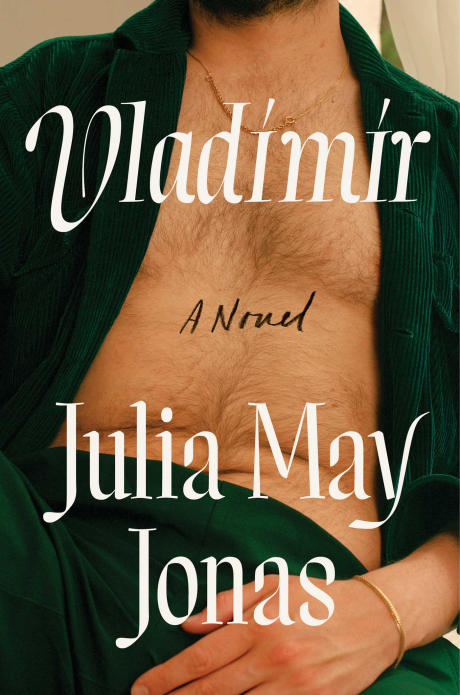
Vladimir An alluring, sharp-witted, and timely first novel delves into the life of a cherished English professor who grapples with a barrage of allegations against her spouse, a fellow professor, made by former students. As the situation gains complexity, it becomes even more intricate when she finds herself developing an intense fixation of her own…
“In my childhood, I held a fondness for elderly gentlemen, sensing a reciprocal fondness emanating from them.”
This is how we meet our captivatingly astute storyteller: a well-liked English professor whose captivating husband, also employed at the same small liberal arts college, is now the subject of an investigation due to his inappropriate liaisons with his former students. Over time, the couple has maintained an unspoken understanding regarding their extramarital endeavors. However, the emergence of these fresh allegations shatters their comfort. The narrator’s fascination with Vladimir, a renowned young novelist who happens to be married, arrives on campus, and their already fragile world teeters dangerously close to eruption.
With this fearless, daring, and extraordinarily self-assured debut, writer Julia May Jonas escorts us into charged territory where ethical boundaries clash with the instincts of the human heart. This propulsive narrative, infused with dark humor and boundless entertainment, masterfully captures the intricate minefield of our present era—revealing the subtle differentiations and the ambiguous space between authority and longing.
About The Author
julia may jonas
Julia May Jonas is a writer, director, and the founder of theater company Nellie Tinder. (www.nellietinder.org) She has taught at Skidmore College and NYU and lives in Brooklyn with her family. Vladimir is her first novel.
As the summer season gradually winds down, the anticipation of cooler classrooms and a respite from the relentless heat wave grows among students. With the start of the school year approaching, many students are embarking on the search for mobile applications that can help them navigate the challenges and demands of the upcoming academic journey. In response to this quest, we’ve curated a comprehensive list of some of the finest educational and organizational apps available. Whether it’s solving math problems. managing notes, tracking reading progress, or even fine-tuning essay compositions, these apps offer a range of tools to enhance the learning experience. These best apps for students are:
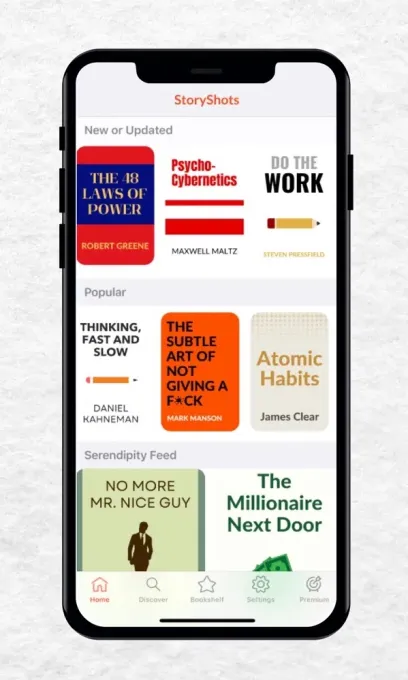
StoryShots: Absorbing Knowledge One Summary at a Time
For those familiar with the last-minute scramble to tackle a book before a looming deadline, StoryShots comes to the rescue. This remarkable app offers an array of book summaries presented in text, audio, and video formats. By breaking down each book into bite-sized moments, StoryShots provides readers with concise paragraphs that encapsulate key takeaways. This feature proves invaluable for students seeking swift understanding, especially when exams or deadlines approach. Notably, StoryShots caters to various learning styles by incorporating infographics, mind maps, presentations, and short videos. Boasting a collection of over 400 books spanning diverse genres, the app offers a wealth of knowledge to explore. With titles such as “A Promised Land” by Barack Obama and “A Brief History of Time” by Stephen Hawking, StoryShots continually enriches its library with new additions.
While the app is available for free with ads, a premium version priced at $3.99 per month grants users access to offline reading. full e-books. audiobooks, highlighting, note-taking, and multilingual books. Both iOS and Android users can partake in this enriching learning experience.
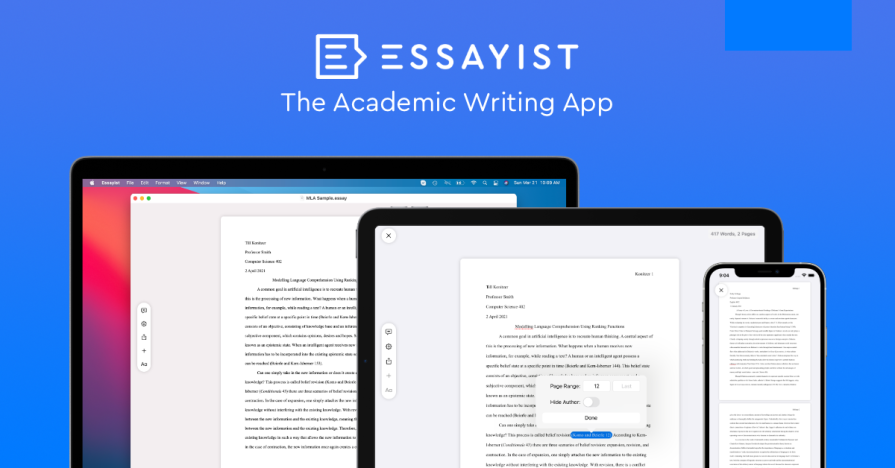
As the name suggests, Essayist is an iOS app that serves as a versatile companion for essay composition. Offering an assortment of citation styles, including APA, MLA, Chicago/Turabian, and Harvard, the app simplifies the arduous process of formatting in-text citations, references, headers, footers, and more. With a reference manager feature that encompasses over 25 reference types, Essayist empowers students to incorporate a wide range of sources into their work. Moreover, the integration of Google Scholar streamlines the process of adding references or URLs. Essayist | The Academic Writing App operates on a subscription model, offering both a monthly plan at $4.99 and an annual plan at $29.99. A free trial awaits new users seeking to harness the app’s capabilities.
Photomath: Illuminating the Path to Mathematical Mastery
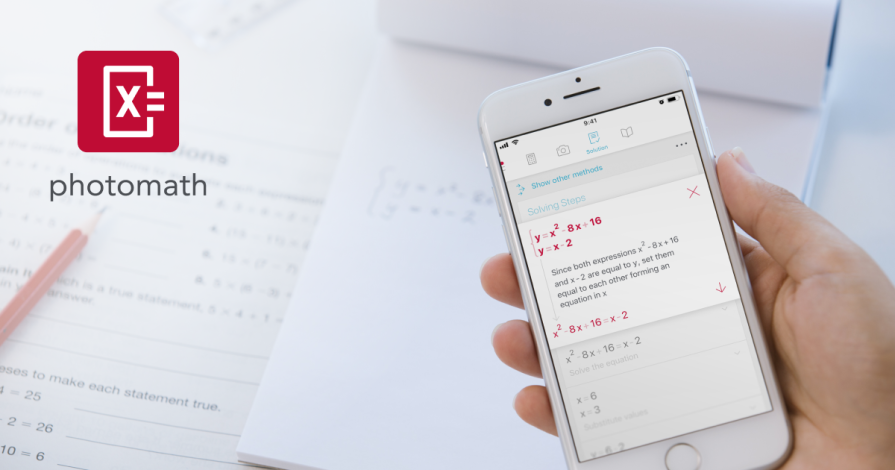
Enter Photomath, a math-solving app designed to tackle complex equations step by step. Users simply capture a math problem using their device’s camera, and the app dissects the problem, presenting a solution in an easy-to-follow manner. While the free version offers an initial glimpse into the solution, a subscription to Photomath Plus, priced at $9.99 per month or $69.99 annually, unlocks comprehensive solutions and additional features. The subscription includes solutions from numerous textbooks, animated tutorials, and voice-over explanations.Photomath serves as a valuable tool for self-assessment and practice, although it’s crucial to use it responsibly and not as a shortcut to avoid genuine problem-solving efforts.
Bookly: Nurturing a Reading Habit with Precision
For students committed to achieving their reading goals, Bookly is a steadfast companion. This tracking and management app empowers users to set monthly or yearly book reading targets and allocate daily reading time. By offering features such as scanning ISBN codes, adding books manually, and setting reading reminders, Bookly promotes accountability and efficient time management. Bookly’s prowess extends to generating reading statistics, facilitating competition among peers, and even integrating ambient sounds to enhance the reading experience. While the free version offers substantial benefits, the Bookly Pro subscription, priced at $4.99 per month, provides access to unlimited books and an array of additional features.
Peech: Transforming Text into Engaging Audio
Peech presents an ingenious solution for multitaskers and those seeking accessible reading experiences. This text-to-speech reader transforms text files, PDFs, books, and online articles into audio content. Whether it’s listening to assigned reading while commuting or assisting individuals with reading challenges, Peech serves as an inclusive tool. Supporting 50 languages, Peech caters to diverse linguistic needs. The free version offers basic functionalities, while the $4.99 weekly subscription grants users the freedom to upload documents and links at will.
Evernote: The Ultimate Organizational Hub
Evernote emerges as a versatile note-taking and task-management app, tailored to suit students’ organizational needs. With an array of templates catering to various requirements, Evernote fosters efficient class note-taking, essay outlining, to-do list creation, and more. Users can categorize notes into virtual notebooks, ensuring seamless organization. Additional features include photo embedding, document scanning, and seamless integrations with various platforms, promoting collaborative efforts on group projects. As an added benefit, Evernote’s evolving AI feature, “AI Note Cleanup,” refines scattered notes into coherent and readable content.
Saturn: Bridging Time Management and Social Connection
Designed exclusively for high school students, Saturn marries calendar functionality with social networking. The app allows students to share schedules, manage events, and communicate with peers while staying on top of their academic commitments. Through personalized notifications and countdowns, Saturn empowers students to optimize their time and stay connected with their community. While Saturn’s exclusivity to high school students may be limiting, it excels in enhancing time management and fostering a sense of community.
Conclusion
As you embark on the upcoming school year, these best apps for students greatly help students, From efficient reading tools to collaborative note-taking platforms, these apps empower students with the tools they need to excel academically and beyond. Whether it’s solving equations, crafting essays, or managing schedules, technology continues to reshape the educational landscape for the better.
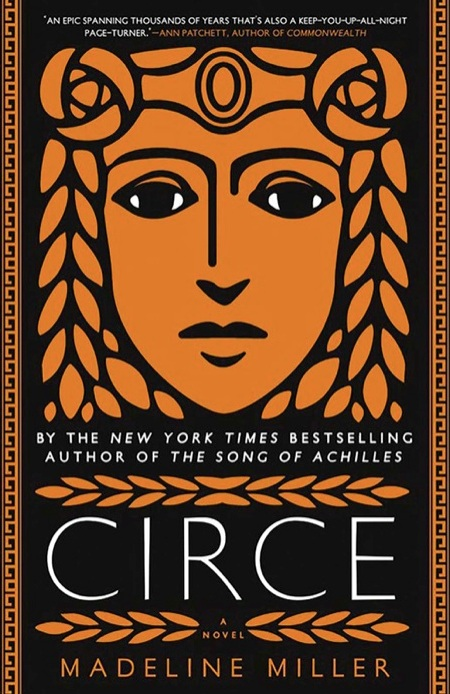
Circe is a novel by Madeline Miller that tells the story of the witch Circe from Greek mythology. The novel is set in the years after the Trojan War, and it follows Circe’s journey from a young woman who is shunned by her family and the gods to a powerful sorceress who finds her place in the world.
Circe is the daughter of the sun god Helios and the nymph Perse. She is a gifted witch, but she is also different from her siblings. She is not as beautiful, and she does not have the same power. As a result, she is often mocked and ridiculed by her family and the gods. One day, Circe falls in love with a mortal fisherman named Glaucos. She uses her magic to make him immortal, but he soon abandons her for another woman. Heartbroken and angry, Circe turns the woman into a monster. This act of revenge earns her the wrath of the gods, and she is exiled to the island of Aiaia.
On Aiaia, Circe learns to harness her powers and to use them to help others. She becomes a wise and powerful sorceress, and she is visited by many famous figures from Greek mythology, including Odysseus, Medea, and Daedalus. Through her experiences, Circe learns about love, loss, and redemption. She comes to terms with her own power and her place in the world. She also learns to accept herself for who she is, flaws and all. Circe is a beautifully written novel that explores the themes of identity, power, and redemption. It is a story about a woman who finds her place in the world, despite the odds. It is a story that will stay with you long after you finish reading it.
About the Author, Madeline Miller
Madeline Miller was raised in Philadelphia and New York City after being born in Boston. She attended Brown University, where she majored in classics and received her BA and MA. She has been instructing high school pupils in Latin, Greek, and Shakespeare for the past ten years. Additionally, she completed coursework at Yale School of Drama’s dramaturgy program and the University of Chicago’s Committee on Social Thought, where she concentrated on the transformation of classical texts into contemporary forms. She resides in Cambridge, Massachusetts, where she writes and teaches. Her debut book is titled The Song of Achilles.
Conclusion
Circe is a complex and well-developed character. She is flawed, but she is also strong and resourceful. She is a survivor, and she learns to use her power to help others.
The novel is beautifully written. Miller’s prose is lyrical and evocative, and she brings the world of Greek mythology to life.
The novel explores a variety of themes, including identity, power, and redemption. It is a thought-provoking and ultimately uplifting story.
If you are a fan of Greek mythology or if you are looking for a well-written and thought-provoking novel, then I highly recommend Circe.