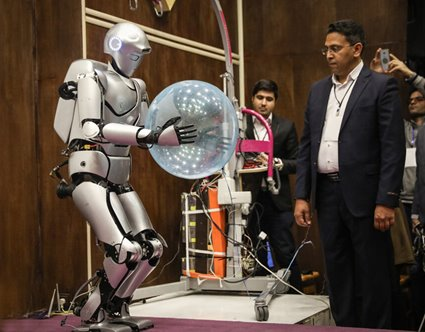
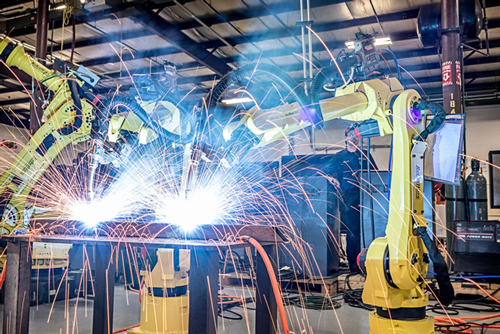
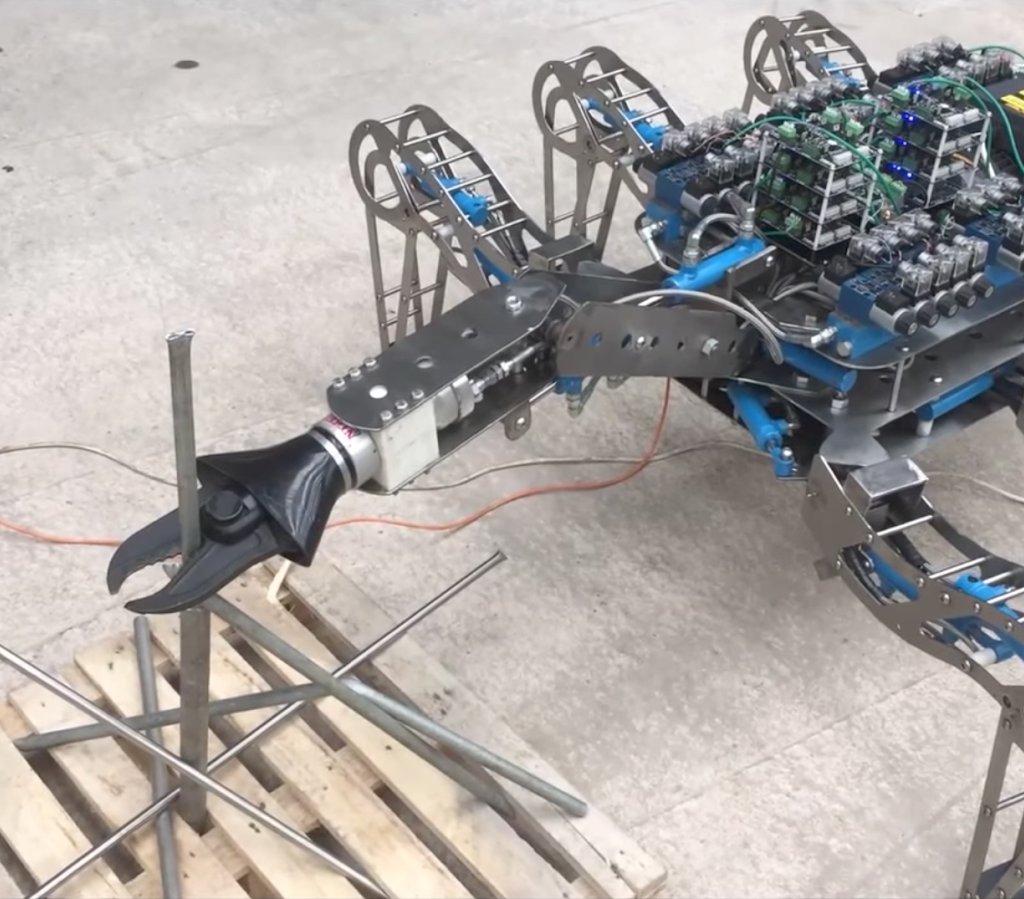
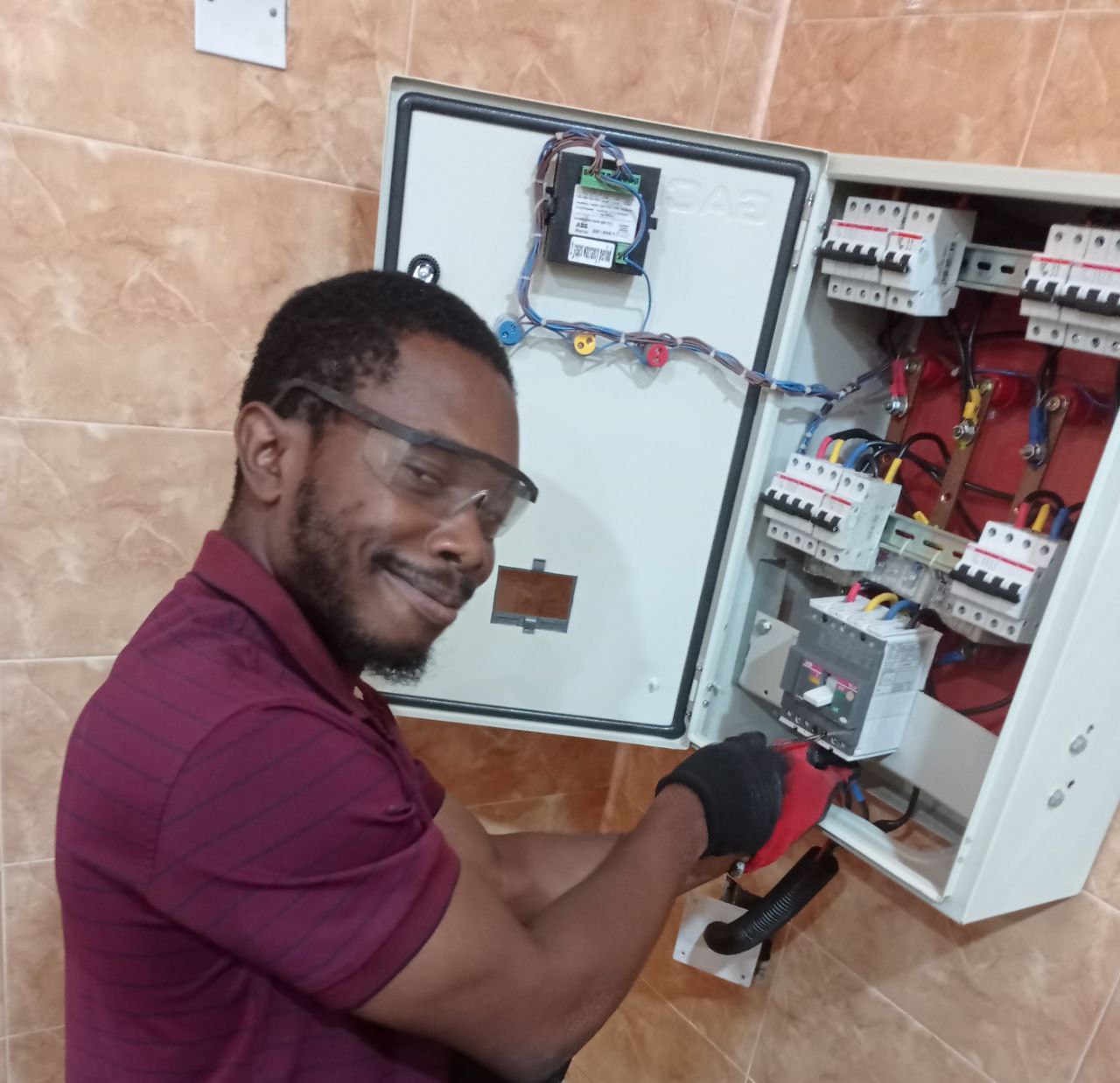
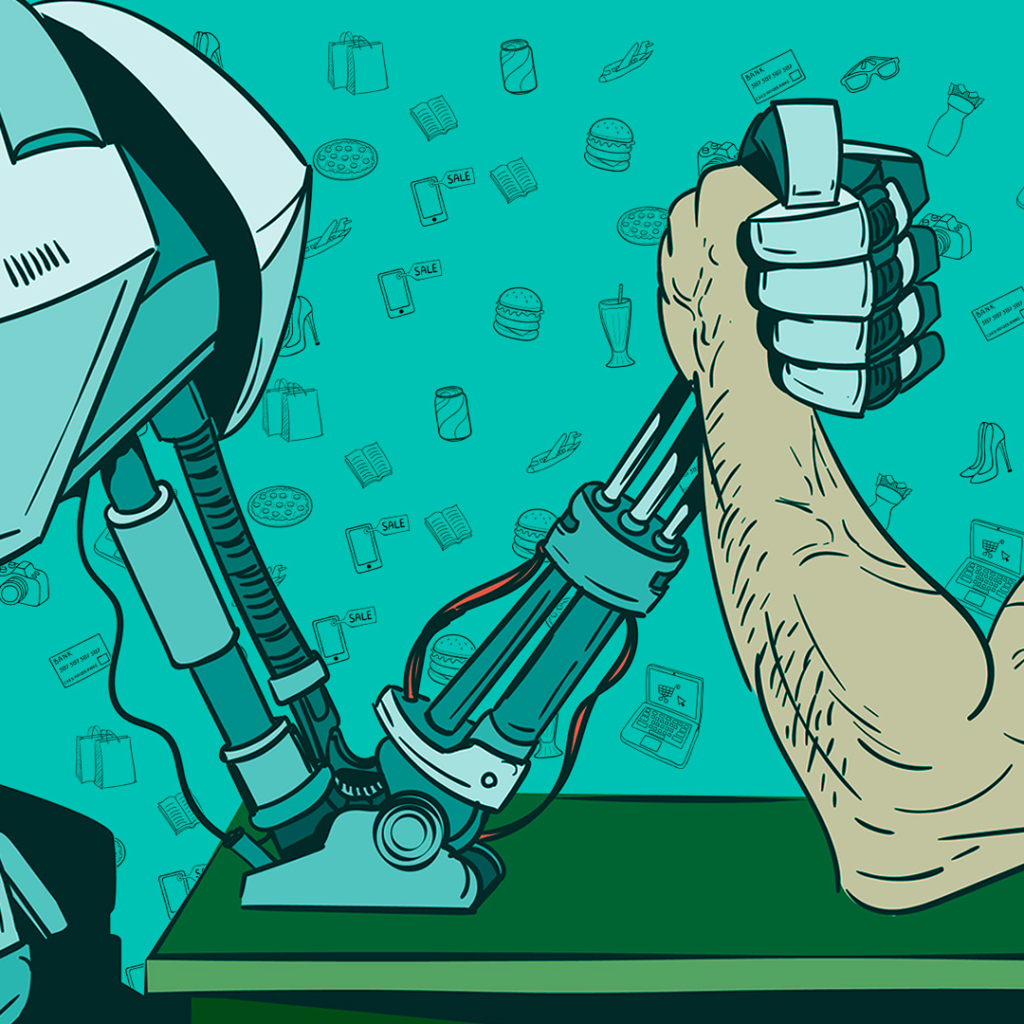
Robots are machines that are capable of carrying out multiple or complex sequences of actions automatically, controlled by an external device. Since they are created to carry out actions, they have been used to take over some human jobs. Let us see how robots are taking over human jobs? And Why?
Why and How Robots are Taking Over human Jobs
Reliability
Robots can work overtime more than humans. Their works are not paid for and they can work for a very long time with accuracy and make few mistakes. They don’t need holidays or rest.
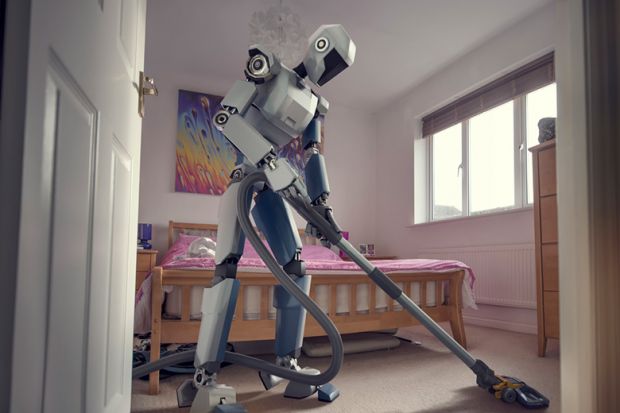
A robot sweeping and cleaning
The robot is more reliable in this sense because it can leverage on the human emotional flaws, bosting productivity and total turn around time. Thereby saving cost also.
Flexibility
A robot is always built to be flexible
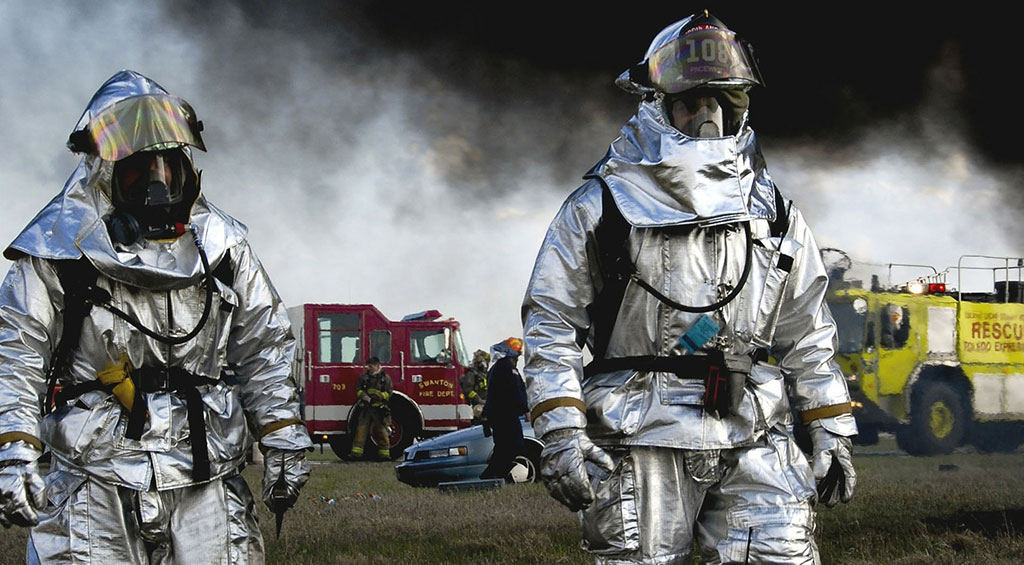
Unlike humans, robots are flexible in the sense that they can work in any environment, working in dangerous areas and reducing harm coming to other human workers. They can withstand harsh weather and conditions than humans. They lift heavy loads, and handle toxic substances.
A typical human needs protective gears at certain environment for certain jobs
Maximum Productivity
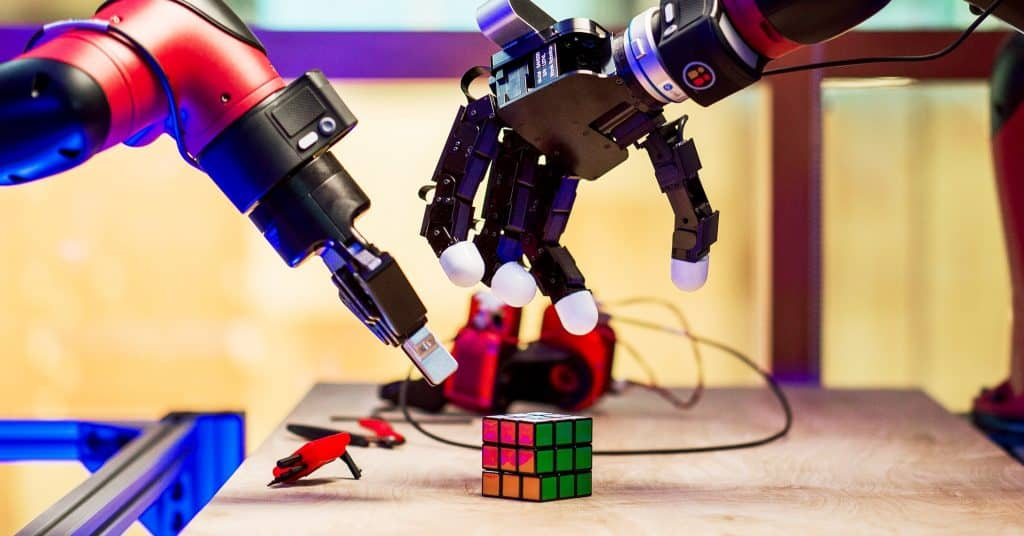
They have been programmed to do many tasks and so they can produce more than humans and they are fast in production. Not needing to divide their attention to any other activity, they focus more on their work. A robot will never feel stressed out and start running slower.
Quality work
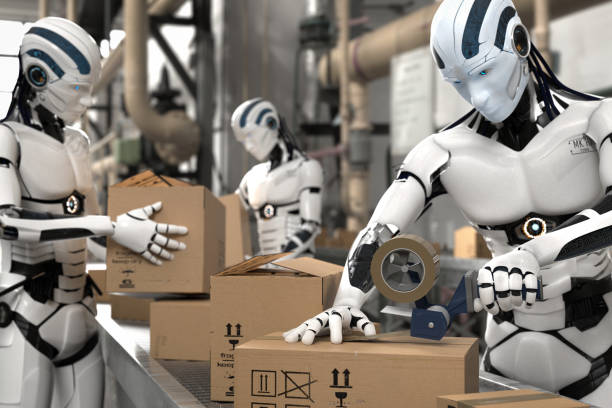
quality work performance of robots
Working as both an employee and quality control system, robots delivers a perfect job at the end of the day. Being created for a particular action or motion, they make less mistakes. Because of their accuracy and good work, they easily replace humans in some kind of jobs.
Safety is the most obvious advantage of utilizing robotics. Heavy machinery, machinery that runs at hot temperature, and sharp objects can easily injure a human being. By giving robots some of the dangerous to do, an employer will likely have to look at a repair bill than a serious medical bill or a lawsuit. People who work dangerous jobs will be thankful that robots can remove some of the risks in their jobs.
Conclusion
It has been a long time coming since robots have been taking over humans’ jobs especially those of heavy risks, and they are relied on for accuracy, timeliness, and faster productivity. The question isn’t whether it is a good thing or not; of course it is a good thing. This isn’t bad for human either because humans have to be the ones who build such robots – at least for now.
Working abroad paves the way for one to learn new things: language, lifestyle, dressing and grooming, food, and lots more. It is fascinating to see people of different cultural backgrounds and race do things their way, and one gets more experienced. Here are some ways one get jobs that can send you abroad for free.
Jobs that Can Send You Abroad (Overseas)
Hospitality
The people hospitality business
Having experience to take care of people either being a host or assisting a supposed host, one can be able to take up an hospitality job abroad. He or she can work in a hotel, restaurants, traveling agencies and more. All that is required is to good at maintaining good relationship and to be welcoming.
Business
Getting hired as an MBA guru
The increase of global and international MBA programs has made it possible for business graduates to be in demand worldwide, workplaces are increasingly globalized and work environments are intercultural. According to Careers for Globetrotters, the amount of the world’s biggest multinational corporations have created opportunities for globally minded individuals with business skills to be abundant. But you don’t have to wait until you have been approved by the MBA, because emerging economies have made it easy for passing graduates.
Educational Jobs
Educational jobs
Teaching jobs are easily found abroad especially English teachers in foreign language-speaking countries. It is more easier getting a job as a permanent teacher abroad than here at home. The United Kingdom reportedly needs twice as many Scientific, Technology, Engineering and Mathematics(STEM) and foreign language teachers as it’s able to produce. One can begin the search of this kind of job in many abroad teaching platforms that mentions different positions even opportunities in international schools, language schools etc. Wanting a higher paid teaching jobs abroad, one has to focus his attention on international schools which have more openings. The number of international schools, according to ISC Research in the UK has more than doubled over the years, amounting to over 9000 schools around the world. And in Asia, almost or more than half a million staffs have been employed.
Teaching career job
The requirements are: a B.Ed. (Bachelor of Education), good teaching experience, and the ability to interact with other people from different cultures.
Self Employment
self employed job
One must not be employed by a company or industry before working abroad. There are many self employed jobs abroad that gives cash to whoever engages in it. Such jobs as graphic designer, writers, translators or stock traders. All that are required is having good marketable skill, having scientific knowledge of things related to business and most importantly, a very good internet connection.
Medical Professions
medical professions are quite needed overseas
International development and humanitarian relief are in need and are hiring medical professionals like nurses, physicians, midwives, mental health specialists, pharmacists and laboratory specialists, along with NGOs, governments, foundations and private consultancies. Its funny too that even cruise ships are in need of medical professionals and here are many opportunities for those who are into healthcare services. The requirements are international healthcare experience, knowing at least two languages, and gaining intercultural skills by studying abroad or even volunteering to do some healthcare services.
Tourism
Being one out of the ten fastest growing sector in the world today, the WTTC (World Travel and Tourism Council) has shown that Tourism has been able to provide 330 million jobs in the whole world. The last world pandemic , COVID-19 which had led to the closing of some international borders, has almost stopped the growth of this sector. But since there are still more people wanting to travel abroad for sightseeing and the rest, tourism have always been ready to accomplish its work. So interested ones can grab this opportunity of this kind of job and of course its requirements are not much. And it is a perfect option in jobs that can send you abroad quest.
No matter what’s on your mind, don’t underestimate the value of networking. Working in the travel and tourism sector, one needs to value social connections above all else, and maintain good relationships, this might at some point help one get accepted when a position becomes available.
Conclusion
Having in mind what you want or need will help you determine where you need to be to accomplish what you have in mind. We have listed many ways you can get jobs that can send you abroad. Let us know what you think in the comment section below.
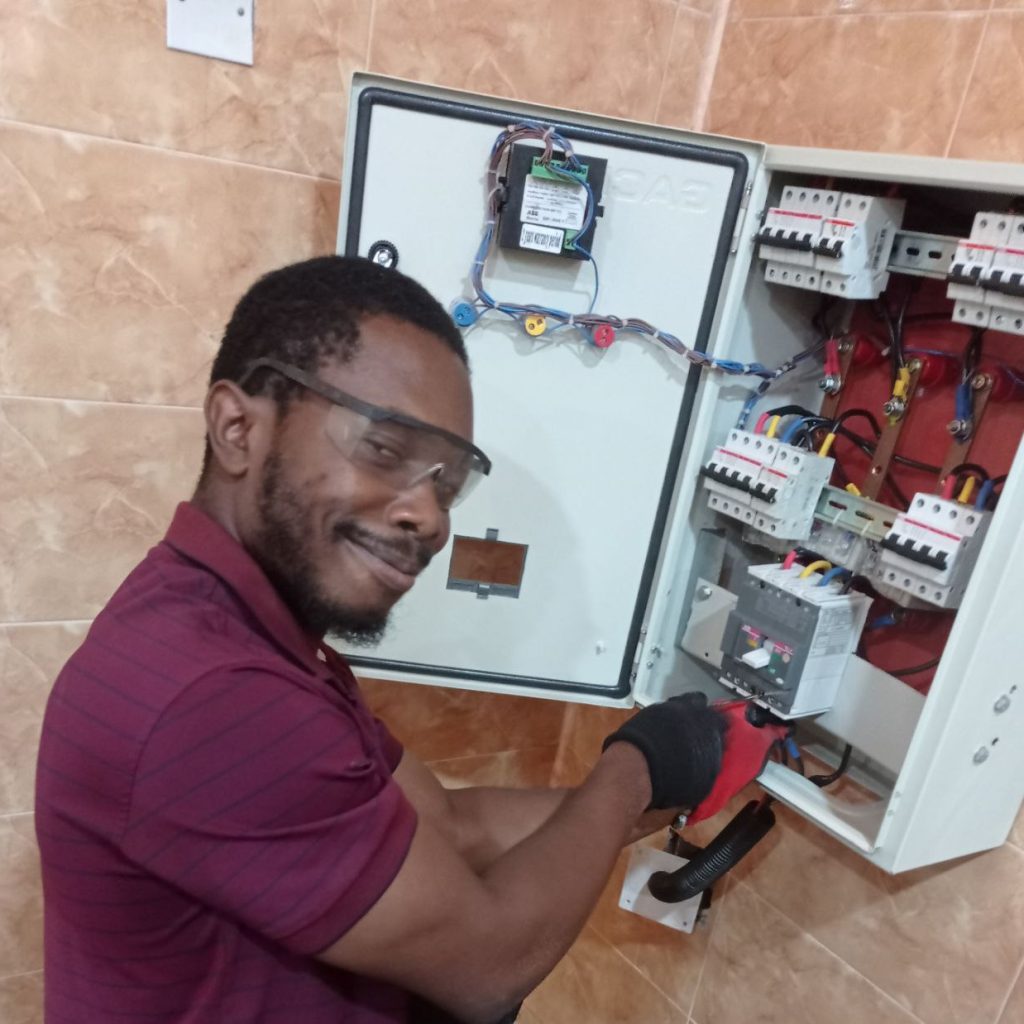
This is a smart build design that involves the construction and assembly of a 3-phase distribution panel at Smartech Labs. This is industrial distribution panel that can be used to safely control the actuators and AC loads in a production facility. This blog post is a step-by-step guide; we will take you through all the processes involved in the making of the 3-phase distribution panel. The right component ratings were critical for everything from component selection to the type of box chosen, the dimensions of the holes drilled, the openings cut out to fit components on the box, etc. IF you want this design, kindly fill out the form below.
It’s a distribution panel with 7 outgoing sub-circuits. Three (3) numbers of single phase outlets. Four (4) numbers of 3-phase outlets. Each outlet is isolated by an MCB. Two (2) pole MCB for the single phase outlets. Four (4) pole MCB for the 3-phase outlets. The input isolator is an MCCB from which all the sub- circuit isolators are supplied.
The Distribution panel during installation
Component Selection and Identification
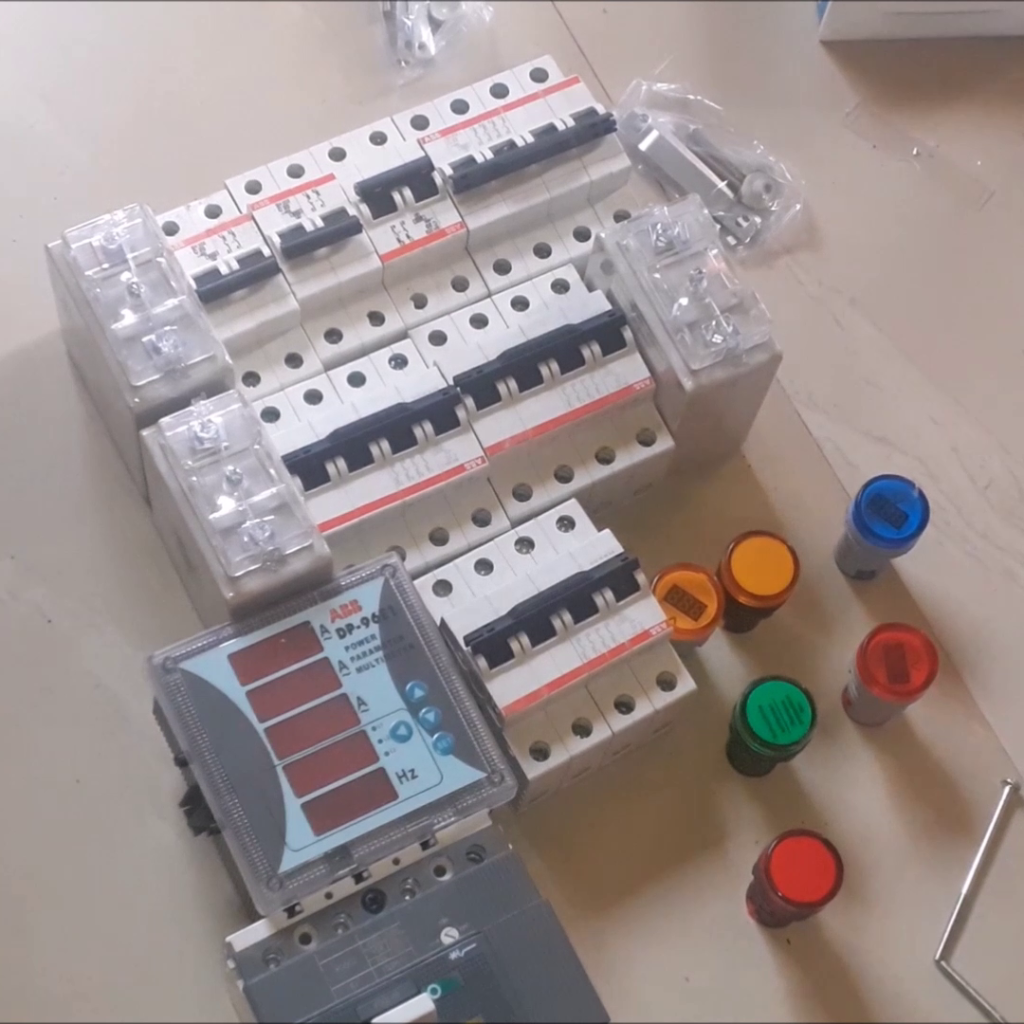
The components used in this design were acquired based on the list below. Their functions are very vital to the needs of the 3-phase distribution panel design.
Panel Box H=600mm x W=400mm x H=200mm….1 pieces
Moulded Case Circuit Breaker (MCCB) 100A….1 pieces
4 pole Miniature Circuit Breaker (MCB)….4 pieces
2 pole MCB….3 pieces
1 pole MCB
Flat copper bars 200A….4 pieces
Current transformer….3 pieces
Power Cable 10mm 4 core….25 yards
Control wire 1.5mm….20 yards
Link wire 6mm….
Pilot Lamps…….3 Pieces
Lamp meter….. 3 pieces
Cable lugs……. 6 pieces
Bolts, Washer and nuts….
Insulation bus bar (angle bar)
Insulation tape
The Schematic Diagram
The logic gates in electronics
This is a commercial product that is being designed and built in Smartech Lab. If you would like a copy of the schematic diagram, please order one from any of the social media platforms listed below.
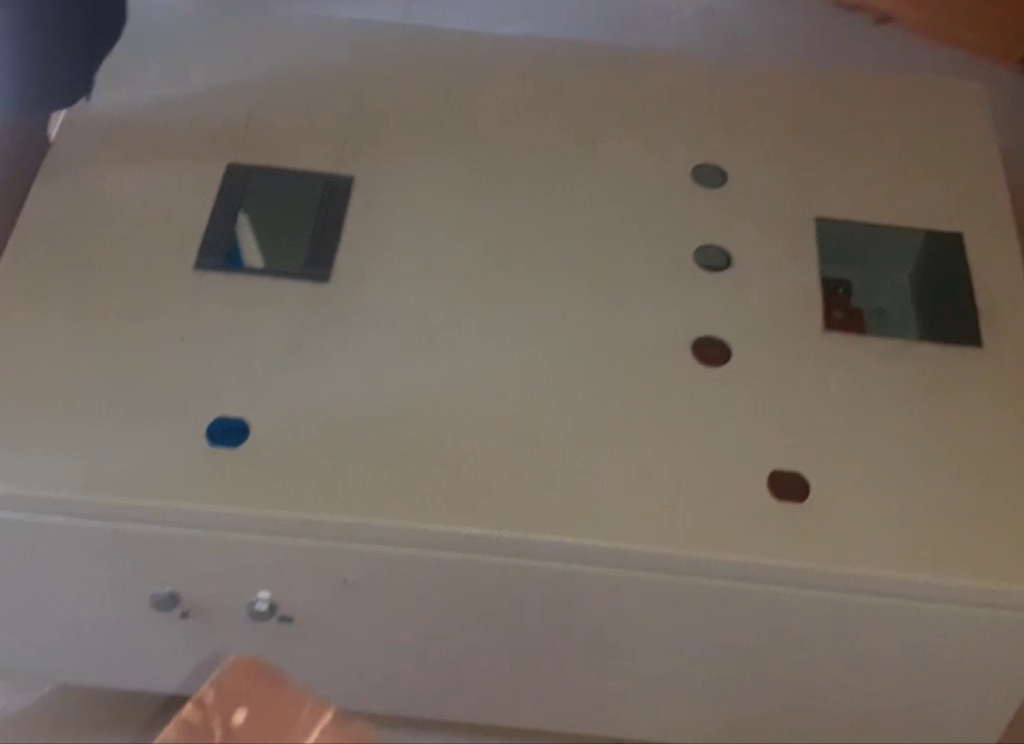
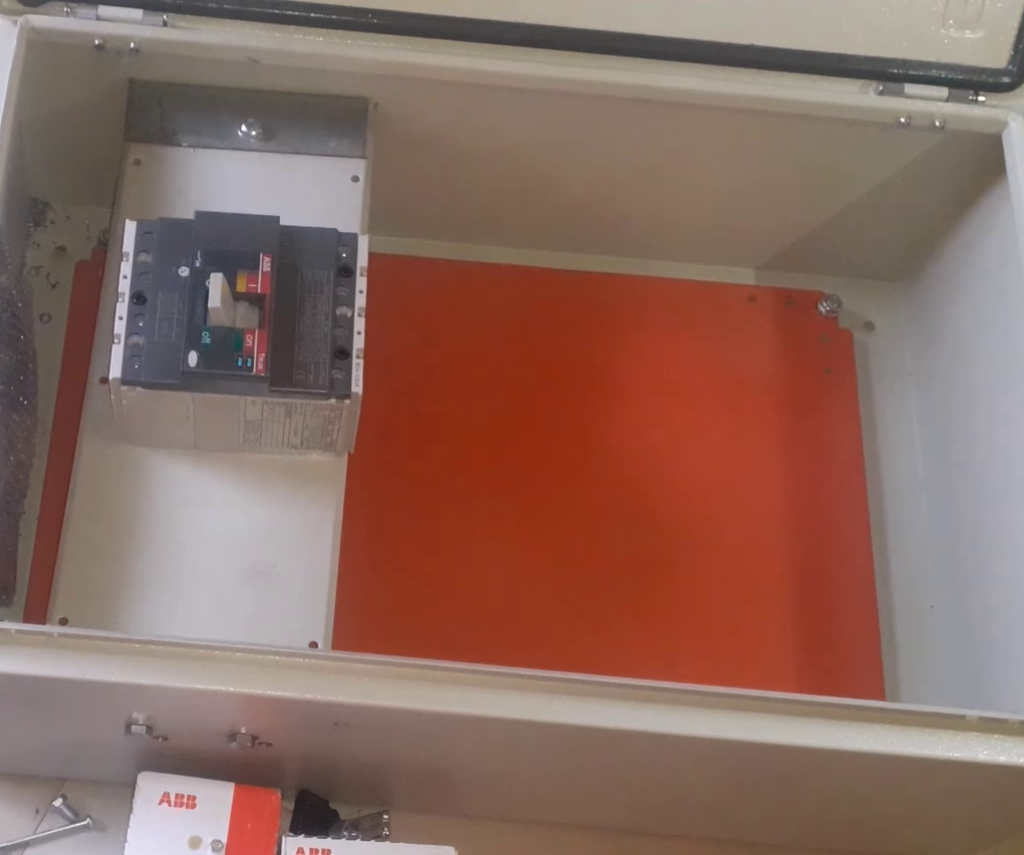
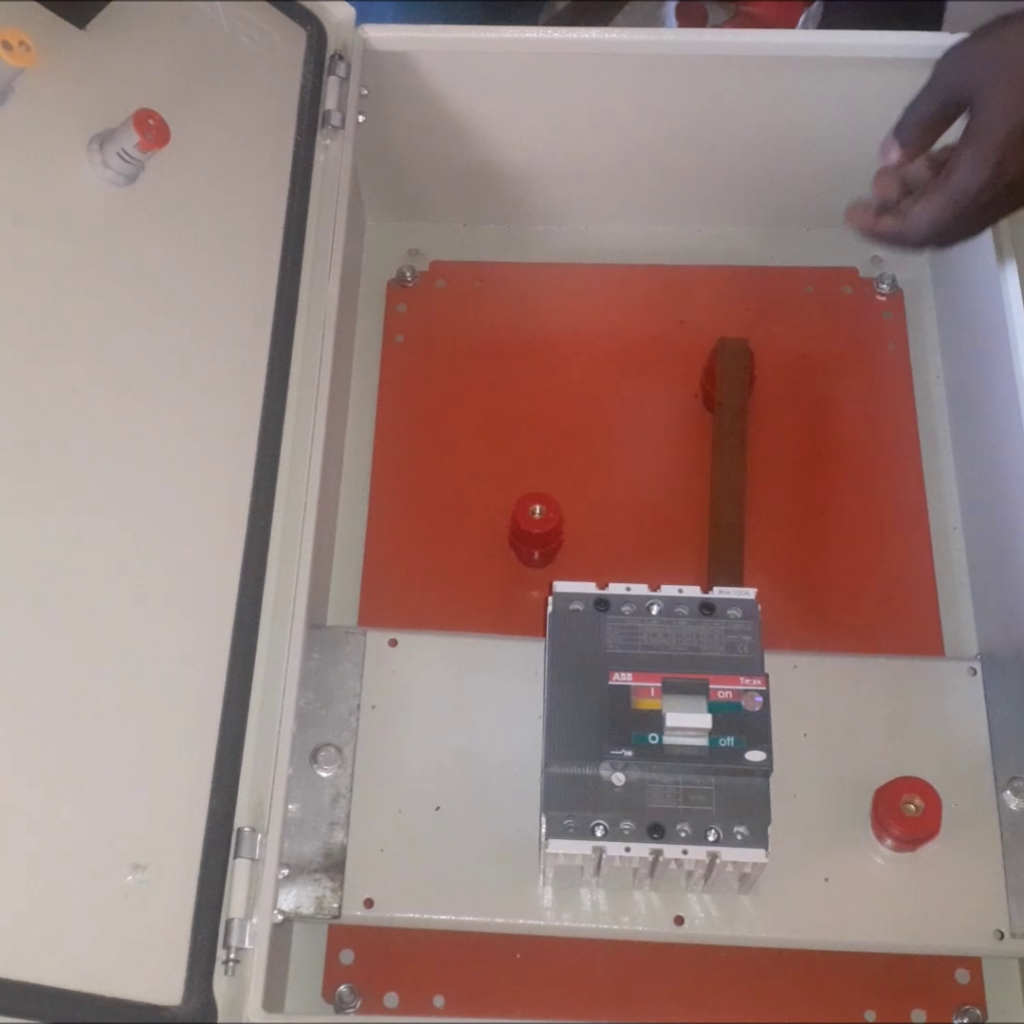
Selecting the appropriate box size and dimension. The 3-phase distribution panel built here used a box dimension of H=600mm x W=400mm x H=200mm. The components needed to be protected from dust and moisture. A suitable box with the right openings to house the load controls must be selected. The box must be big enough to contain all the components needed for the build design. As shown below, this box has a two bases at which components like breakers are placed strategically. As such, even when the lid is closed, the the openings were made to bring out the switch MCCB button.
Step 2:
Having an idea of how the design would turn out to look at the finished stage is very important. The arrangement of the components inside the box, and how they will be presented to the used or maintenance team when they open it is also very important.
Setting the components at the right orientation and alignments in the box. The box size may seem big enough to contain all the components but without tinkering and deciding where each control of the 3-phase distribution panel would be placed, the whole design will become quite cumbersome when it comes in routing of wires. Hence the components have to be mapped out at stratetic positions, the ease of running wires through them ascertained and ensuring that the box closes after it is all done.
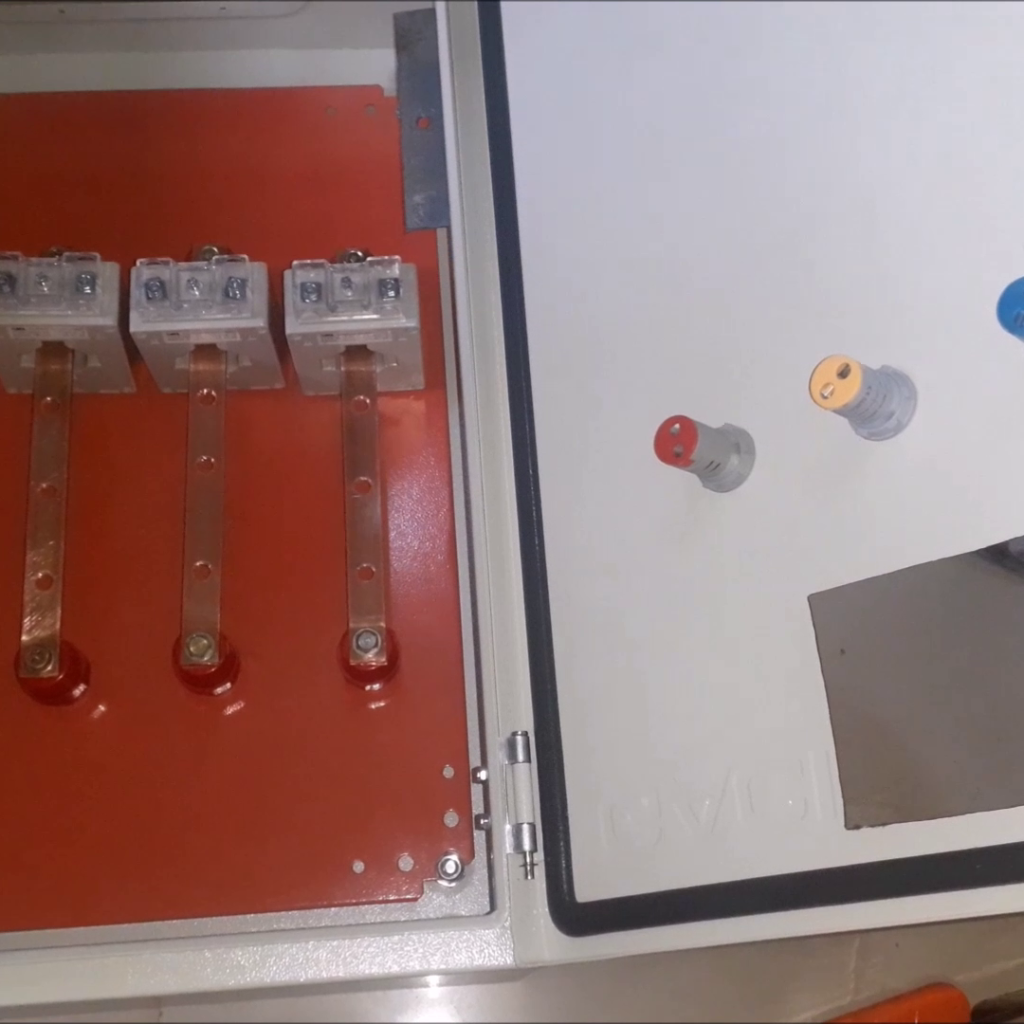
Setting the copper flat bar and current transformers
Construction of the Distribution Panel Design
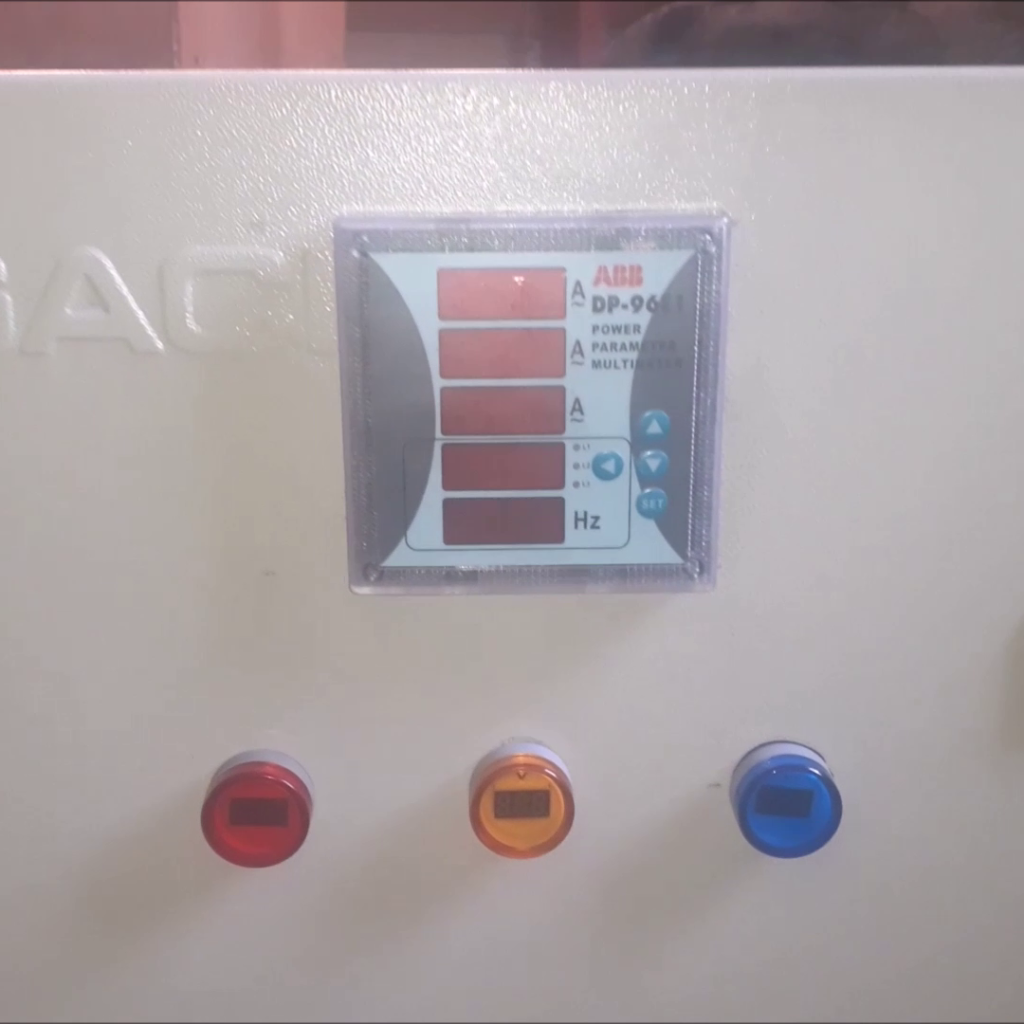
To get started on the construction, the base setting was used. Insulation bus bars and copper flat bars were used to make the termination and foundation points for connections. These were laid out perfectly and according to plan to ensure easy connections and termination of wires. The current transformers were used to do load balancing on each phase, hence the placement on each copper bar. The 3-phase voltmeter indicators were also mounted on the box lid. They came in the colors of red, green, and yellow.
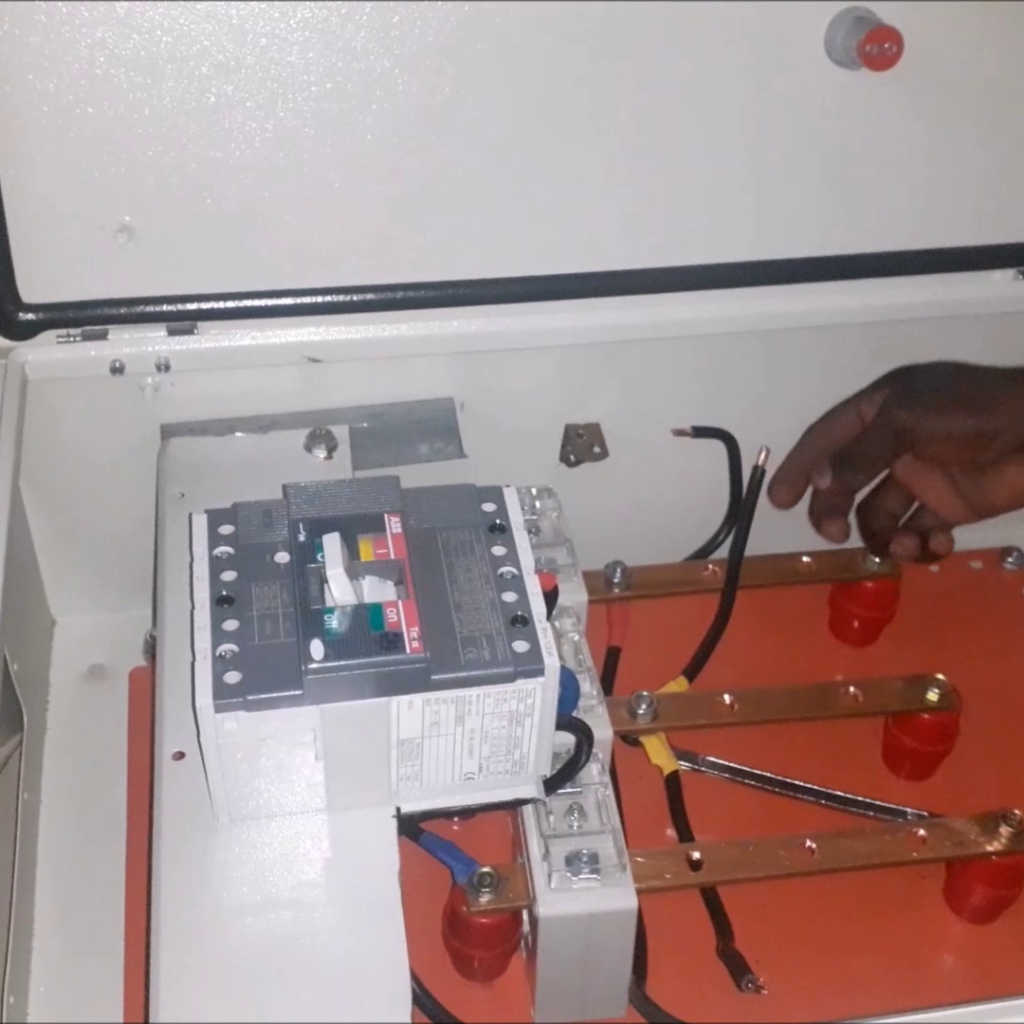
These indicator voltmeters were also made to read the various voltages of the phase they were connected to. The MCCB (main breaker switch) is connected first, terminating its cable on the copper flat bar below it. This switch controls everything on this distribution. Once it is flipped on, the distribution is activated.
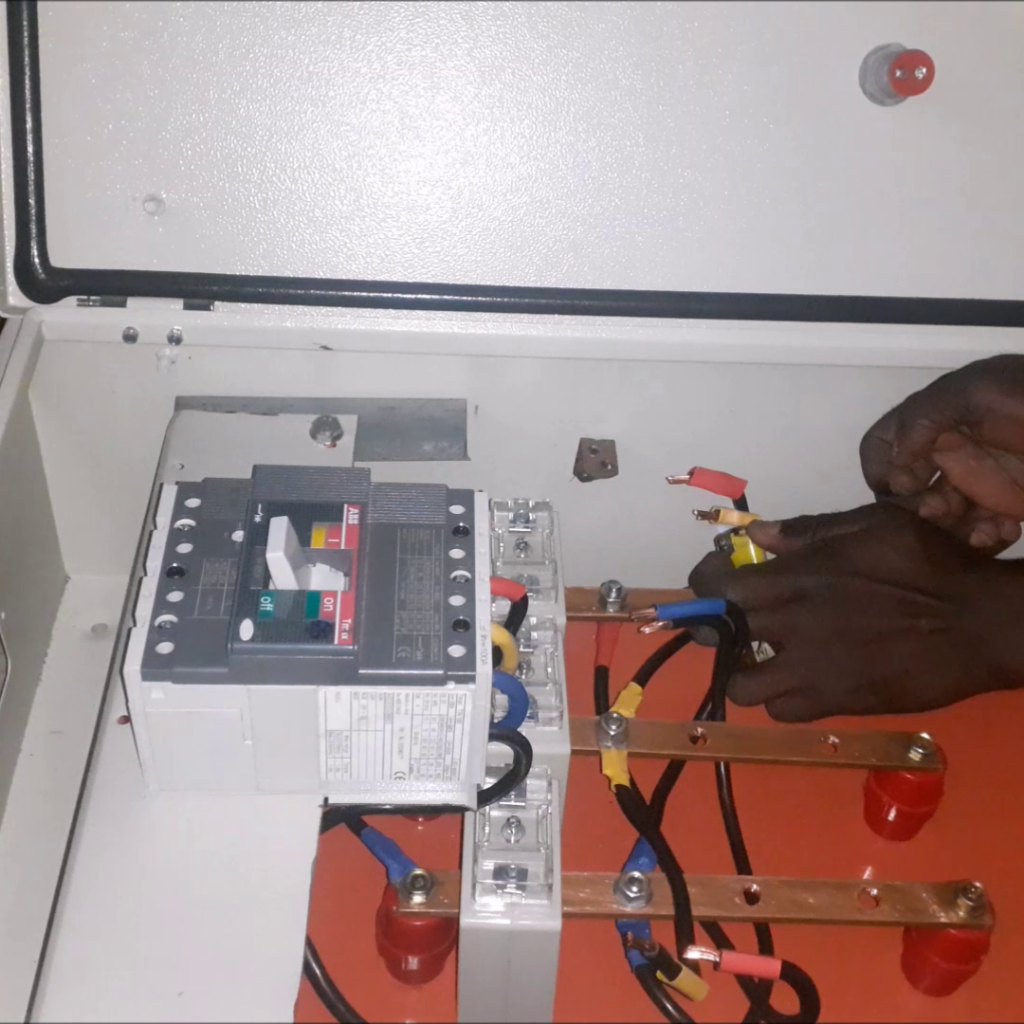
lugging the connection cables
Properly lugged cables were used to make firm connections to this breaker. We used the other 3-phase breaker as shown in the schematic diagram. The breakers were finally brought in on a DIN rail. Next, is to wire the controls. This was neatly done and the indicator voltmeters were connected.
Conclusion
The finished design
As shown, the design is fully assembled and ready to be installed at the facility of choice. It is fully automated, and easy to use. It is also sleek and well presentable; giving both an efficient and robust design feel. And this is how we designed the 3-phase distribution panel design that can be used in any factory or facility to ensure proper load balancing. Let us us know if you have any questions or if you would want to order one from us
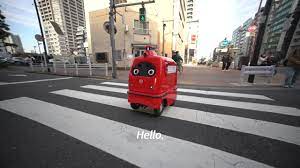
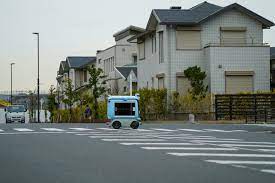
The friendly delivery robots has a four-wheel robot chirps “Excuse me, coming through” as it avoids pedestrians on a roadway outside of Tokyo as part of an experiment that businesses believe will address rural isolation and labor shortages.
Self-driving delivery robots will be able to travel the streets of Japan beginning in April thanks to updated traffic regulations.
The devices’ proponents believe they may someday make it easier for elderly people in sparsely populated rural areas to get items while also addressing the persistent scarcity of delivery personnel in the nation.
Hisashi Taniguchi, head of robotics company ZMP in Tokyo, agrees that there are obstacles to be solved, such as safety issues. “They are still outsiders in human society, so it makes sense that people could perceive them uncomfortably,” he told AFP.
Humans will be able to intervene if necessary and will be able to observe the robots’ operations from a distance. According to Taniguchi, the robots must “be humble and endearing” in order to arouse trust.
ZMP has collaborated with industry titans like Japan Post Holdings in its delivery robot testing in Tokyo. Its “DeliRo” robot aspires for a cute appearance and has huge, expressive eyes that can become unhappy if people stand in its way. He said, “Every youngster around here knows its name.”
What about some hot beverages?
The cuteness serves a serious purpose.
With approximately 30 percent of its population over 65, Japan has one of the oldest populations in the world. Many people reside in sparsely populated rural areas with difficult access to basic essentials. Businesses find it challenging to meet the demands of e-commerce and delivery driven by the epidemic because to labor shortages in major cities and new regulations restricting overtime for truck drivers.
According to engineer Dai Fujikawa of electronics giant Panasonic, which is testing delivery robots in Tokyo and the adjacent Fujisawa, “the lack of personnel in the transport sector will be an issue in the future.” “I hope that where necessary, our robots will be deployed to take over and assist relieve the manpower shortage,” he told AFP. Similar robots are already in use in nations like the UK and China, but Japan is worried about everything from collisions to theft.
According to regulations, the top speed is limited to six kph (four mph), thus there are “very few chances of severe injury in the event of a collision,” according to Yutaka Uchimura, a robotic engineering professor at Shibaura Institute of Technology (SIT).
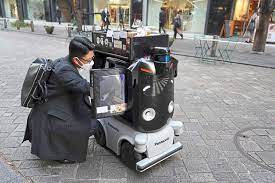
But he added that it would be very concerning if a robot “moves off the sidewalk and collides with an automobile due to some mismatch between the pre-installed location data and the actual environment.” According to Panasonic, the “Hakobo” robot can decide for itself when to turn as well as recognize and avoid obstacles like oncoming cyclists and construction zones.
According to Panasonic’s Fujikawa, one person at the Fujisawa control center concurrently supervises four robots via cameras and is warned whenever their robotic charges get blocked or stopped by obstacles.
In such circumstances, as well as in high-risk locations like crossroads, humans will take action. Hakobo is set up to record and give operators real-time photographs of traffic signals as it waits for orders. To date, test runs have included everything from providing food and medicine to inhabitants of Fujisawa to selling snacks in Tokyo while using amiable speech patterns like: “Another chilly day, huh? How about a few hot beverages?”
Naoko Kamimura, a bystander, remarked after purchasing cough pills from Hakobo on a Tokyo street, “I believe it’s a terrific idea.
“Robots allow you to shop more casually, even though human store clerks may feel more reassuring. You can simply leave the store without feeling bad even if you don’t think anything is worth buying “She spoke.
Given the incentive to preserve human jobs, authorities do not anticipate that robots will soon be a common sight on Japanese streets. Because there are jobs at risk, “we don’t expect radical change right once,” said Hiroki Kanda, a representative of the commerce ministry supporting the technology.
“I believe that the expansion of robots will be more gradual.”
The limits of the technique are known to experts like Uchimura from SIT.
Even the most straightforward human duties might be challenging for robots to replicate, he claimed.
Uchimura thinks it would be safest to introduce the robots in sparsely populated rural areas first. Firms claim that the demand in cities will likely increase the commercial viability of urban deployment.
Taniguchi, the president of ZMP, aspires to someday see the machines in use worldwide.
If these delivery robots could police a neighborhood or check on the safety of old people, he added, “I think it would make people pleased.”
This is a friendly robot that help people deliver they good to the they addresses, and the robot is one the japan product and a very good one. You can drop your comment on the comment section to tell us what you think about this robot.
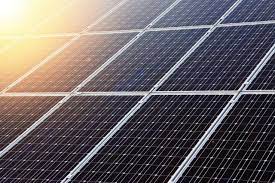
Solar cell material is a new materials with tremendous possibilities for light harvesting and emission include solar cells, TVs, and display screens. In a recent study, scientists discovered a novel method for improving the performance and stability of a specific subtype of these materials known as perovskites. The study’s findings were presented in an article that was published in ACS Applied Electronic Materials.
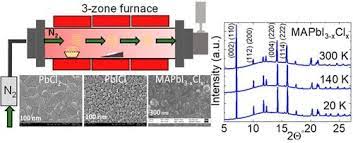
A novel technique for creating hybrid perovskites has been developed by researchers from the University of Missouri in cooperation with researchers from the University of Western Cape in South Africa and physicists from the U.S. Department of Energy’s (DOE) Argonne National Laboratory. These materials are a mix of organic and inorganic semiconductors that may serve as the foundation for brand-new solar cells or other electrical gadgets.
According to main author and MU professor Suchismita (Suchi) Guha, “Organic-inorganic hybrid perovskites have grown more intriguing to the materials and electronics communities, especially during the past 10 years or so.” “They can now be as effective as solar cells made of silicon in some situations. They may be utilized and modified for a wide variety of applications and are also considerably more adaptable than silicon.”
The procedures for creating lead halide perovskites were improved by Guha and her associates. Previous methods for producing these thin-film perovskites needed solvent-based liquid processing, rendering the films vulnerable to deterioration when exposed to air. Additionally, one of the molecules would have a structural change during the previous manufacturing process, resulting in performance restrictions under actual operating circumstances.
By using the novel method, the scientists were able to stop the transition and maintain the afflicted molecule’s stable structure throughout a wide temperature range. Furthermore, the new method made the perovskite air stable, fitting it for a possible solar cell.
“Many studies have examined strategies to try to improve the stability of hybrid perovskites, including diffusion barriers, additive engineering, and chemically inert electrode optimization, but this is one of the first studies to look at the growth method itself as a way to boost the final performance of the device,” Guha said.
Argonne scientist Evguenia (Jenia) Karapetrova and Guha employed X-ray diffraction studies at Argonne’s Advanced Photon Source (APS), a DOE Office of Science user facility, to validate the molecular structure of the perovskite material.
The ability to define the perovskite structure at the APS offers a special window into the potential of this useful material, according to Karapetrova.
Guha claimed that the secret to better gadget performance seems to be to avoid phase changes. “We illustrate the road to an enhanced and possibly usable perovskite by keeping a stable structure across the operational temperature window.”
The solar cell can both harvest and emit light offer exciting potential for technologies that range from solar cells to TV and display screens. This was detected by the scientist. you can drop your comment on the comment section
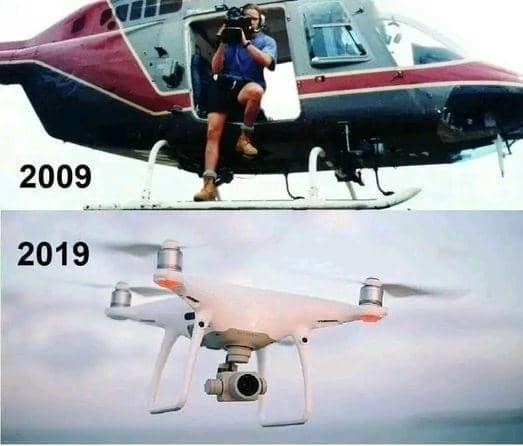
The introduction of drones into the film industry ushered in a new era of filmmaking. Before the era of 2010, camera drones were not available, and the pilot and the cameramen felt like Gods who could make the aerial flight videos. In less than 10 years, drones replace workers in the movie industry, let us see how in details below.
Summary of How Drones Have Replaced Workers in the Movie Industry.
Drones are cost-effective aerial shots: Drones can capture high-quality aerial shots at a lower cost compared to traditional methods using helicopters.
Increased versatility: Drones can easily maneuver into tight spaces and provide new angles for filming.
Improved safety: Drones eliminate the need for human pilots to fly in hazardous environments.
Faster production: Drones can shoot aerial shots much faster than traditional methods, reducing production time.
Enhanced creativity: Drones provide filmmakers with new tools to explore and express their creativity.
Saving Time with Cost
The use of drones in the movie industry has revolutionized the way filmmakers capture aerial shots. Previously, obtaining aerial shots was a time-consuming and expensive process that required the use of helicopters or cranes. This process not only took a lot of time to set up, but it also posed significant safety risks to the crew members involved. With the advent of drones, however, filmmakers now have a safer, faster, and more cost-effective way to capture stunning aerial footage.
Drones have replaced workers in several key areas of the movie industry, including cinematography, scouting, and location management. In cinematography, drones equipped with high-quality cameras can capture stunning aerial shots that were previously only possible through the use of expensive equipment or hazardous methods. With drones, filmmakers can now achieve aerial shots that were once thought impossible, capturing breathtaking landscapes and panoramic views with ease.
Smart and Cost Effective Location Management
Drones are used to survey locations before filming. This gives filmmakers a sense of the lay of the land, identifies any threats, and determines hot spots for capturing footage. These drones now replace workers in the movie industry who could have been paid to survey the filming area for wildlife.
Location management is another area where drones have replaced workers in the movie industry, Drones can now be used to monitor the area during filming, ensuring that all activities are carried out safely and efficiently.
Reduced Labor Cost
One of the biggest advantages of using drones in the movie industry is the significant cost savings that they provide. Traditional methods of capturing aerial shots can be very expensive, in contrast, drones are inexpensive and require only a small team of operators, thereby, drones have replaced aerial cinematography workers in the movie industry, resulting in significant cost savings for filmmakers on equipment and personnel.
Traditional methods of capturing aerial shots pose significant safety risks to the crew members involved, which are mitigated with the use of drones. Drones are operated remotely, reducing the risk of accidents or injuries to the crew. Finally, the use of drones in the movie industry has also reduced the time it takes to capture aerial shots. Traditional methods of capturing aerial shots could take hours or even days to set up and execute, whereas drones can be deployed in a matter of minutes. Aside from saving time, it also makes filmmakers more flexible and responsive to changes in their filming schedules.
Conclusion
In conclusion, drones have replaced workers in the movie industry by providing a safer, faster, and more cost-effective way to capture stunning aerial shots. With drones, filmmakers can now achieve aerial shots that were once thought impossible, saving time and money in the process. As drone technology continues to improve, it is likely that the use of drones in the movie industry will only continue to grow, leading to even greater cost savings and improved safety for the crew members involved.
Do let us in on your thoughts in the comments section. Cheers!
Slime mold-powered alive wristwatch. Most individuals spend their days and nights with devices like cellphones, computers, and smartwatches in their pockets, on their wrists, or somewhere else near by.
However, many individuals are ready to throw away or replace their item without giving it much thought when these technologies malfunction or a newer model enters the market. Electronic garbage is the fastest-growing type of waste, with 40 million tons produced annually as a result of its disposability.
Jasmine Lu and Pedro Lopes, researchers at the University of Chicago, pondered whether they might alter that erratic relationship by physically bringing machines to life.
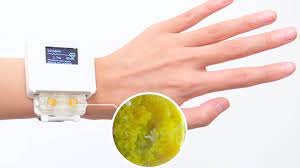
The researchers developed a timepiece that only functions when the electrically conductive single-cell organism known as “slime mold” is in good condition, necessitating the user’s feeding and attention.
They then conducted tests to see how this live item altered the wearer’s attitude toward technology, turning the customary one-way relationship into a cooperative one.
Lu, a graduate student in his fourth year working in assistant professor Pedro Lopes’ Human-Computer Integration Lab, observed that “people were forced to think about their relationship to electronics in a variety of really intriguing ways.”
“People who spoke about their usage of Fitbits, regular smartwatches, or other wearable technology claimed they only used it for that specific reason. And because they had to take care of this equipment, it seemed more like a two-way interaction. Because it was alive, they felt a connection to it that prevented them from just putting it in the closet or throwing it away.”
Lu created and produced the timepieces, which can both tell time and gauge the wearer’s heart rate. The second purpose, however, is reliant on the viability and distinctive qualities of Physarum polycephalum, a kind of slime mold frequently referred to as “the blob” because of its quick growth, toughness, and intriguing maze-solving skills.
The user must frequently feed the creature a solution of water and oats to encourage its growth. The organism is housed in an enclosure on the watch. The heart rate monitor feature is activated when the slime mold crosses over to the other side of the container and creates an electrical connection. In the absence of food, the organism can also go into a dormant stage that allows for a subsequent resuscitation days, months, or even years later.
Making things simpler and faster to use is the driving force behind a lot of human-computer interaction research, according to Lopes. “Jasmine, however, believed that there should be more conflict; you should have to take care of it and feed it each day for the purpose of just having to think about it. So it’s sort of like a study report and an art work.”
Five volunteers wore the timepieces for two weeks in a research that Lu and Lopes conducted after the watches had been constructed. The users took care of the slime mold throughout the first week before the heart rate monitoring was turned on. When volunteers stopped feeding the creature for the second week, it dried out and lost its ability to regulate heart rhythm. Participants recorded their thoughts on the gadget in notebooks throughout the trial and provided answers to interview questions.
Researchers discovered a strong level of connection to the watch, with some users describing it as feeling like a pet and even giving it a name or delegating feeding duties to a partner when they became ill.
In comparison to virtual pets like Tamagotchis or The Sims, which may be casually reset after death, subjects claimed that the bond was more important. Even more unexpected was the study subjects’ emotional reaction when instructed to ignore the creature, feeling shame or even mourning.
“Most of the stunned onlookers said, “Really? I must perform that?” said Lopes. “The replies were remarkably human. Some people felt depressed, while others genuinely believed that the relationship had been severed.”
At the prestigious 2022 ACM Symposium on User Interface Software and Technology, Lu gave a presentation on the research and a demonstration of the watch. Her aim is that the findings would spur designers to develop technologies that inspire connection and mutual benefit, making gadgets seem less like throwaway tools and more like partners rather than merely inventive new devices that operate on slime mold power.
With our electronics, we may practice many various types of care, such as cleaning and caring for them or fixing them when they break, according to Lu.
“However, these care-related factors are frequently neglected in modern consumer item design or rendered inaccessible; they are created to be discarded rather than utilized more. Therefore, I believe that emphasizing this component of caring for technologies rather than merely consuming them has design implications.”
The 35th Annual ACM Symposium on User Interface Software and Technology includes the publication of the article.
A little structural sensor has few millimeter-wide sensors can be used to make wind turbines, ships, and bridges safe. For their device, researchers used a vibrating guitar string as a model for the technique. However, while the sensor’s oscillations will change depending on how the structure to which it is attached behaves, the string must vibrate at a specific frequency to produce the exact tone. These differences can serve as alerts that something is off.
The sensor can detect structural overloading, material flaws, and maintenance requirements in this way—before serious failures take place.
A researcher at SINTEF Digital, Guido Sordo is developing brand-new sensor types that can be employed to safeguard our larger structures and buildings.
A notable example of a construction that would have benefited from the use of a sensor of this kind is the Badderen bridge in the county of Nord-Troms. Last summer, when the bridge gave way, traffic had to be diverted 600 kilometers. It is obvious that such mistakes might have significant time and financial impacts.
Predictive maintenance
According to Sordo, “the failure of only one structure can prove to be highly expensive.” “This is why it is so important to keep an eye on our buildings. This can be accomplished by mounting sensors on objects like bridges, machinery, or ships. “The behavior of the various structures can then be observed using these sensors,” he clarifies.
Things going entirely bad are extremely uncommon. Wind turbines and bridges that are so severely damaged that they collapse are uncommon.
According to Sordo, “the sensors we build are meant primarily to optimize maintenance processes and lower maintenance expenses.” “Problems are discovered at an early stage, making it far easier to predict what has to be done and when,” he claims.
This makes it possible for operators to undertake “predictive maintenance,” or maintenance that is done only when it is required.
An inexpensive technology
In order to monitor structures like buildings and other constructions, a wide range of different sensors can be affixed to them.
There are lots of low-cost sensors available, but Sordo warns that doing so can sacrifice precision and stability over time. “Some have very high performance levels, but they can be quite difficult and expensive to build. Our goal is to create a sensor that is comparable to the best ones now on the market but significantly less expensive “He claims.
Sordo declares, “Our emphasis is on mechanical stress monitoring. According to him, the sensor’s oscillation changes in reaction to minute movements of the structure and predicts exactly what will happen.
From research to product
Just a year after Sordo began working on the project, proof that the sensor is functional was put together, but much more testing and development must be completed before it can be sold.
Sordo is currently working to secure funding and assemble a research team. At the Norwegian conference “The Sensor Decade,” where he presented his work in June of last year, he saw a lot of interest in the sensor and the measurements it is capable of.
According to Sordo, the meeting “builds links between the scientific and commercial sectors.” In the future, he says, “we will be trying to encourage partners to participate in this research,” as they are currently working on the project alone.
Vacuum guarantees accuracy
The sensor is incredibly small, with a filament that is only one millimeter long. Microelectromechanical systems, or MEMS, is the name of the technology.
The sensor in our case is only three by three millimeters across and a quarter of a millimeter thick because the system is so “micro.”
According to Sordo, larger sensors with equivalent oscillating filaments have previously been available on the market. “We have used SINTEF-developed technologies to reduce sensor size and enhance sensor performance. It becomes stable, accurate, and energy-efficient when packaged in a vacuum “He clarifies.
Robot’s speech are anticipated to enter a variety of real-world contexts as they evolve, including homes, offices, malls, airports, healthcare institutions, and assisted living facilities. Roboticists need to make sure that people have a positive perception of and faith in robots, though, in order to encourage their broad usage and adoption.
Recent research at Lund University in Sweden sought to determine the factors that influence a human user’s trust in robots. They specifically sought to ascertain whether a humanoid robot’s ability to speak can affect a human user’s faith in it in their paper, which was scheduled to be published in the proceedings for the SCRITA workshop at IEEE Ro-man 2022.
Amandus Krantz, one of the researchers who conducted the study, told TechXplore, “The concept for the paper came about after we obtained some unexpected outcomes in a previous experiment. “We were looking into how unreliable gaze behavior can affect user confidence in a humanoid social robot. The findings revealed a substantial change in trust across all conditions between before and after interaction with the robot, but no decline.
Previous research in robotics reveals that humans’ trust in humanoid robots may be influenced by their perception of their intelligence. Krantz and his colleagues began to consider the notion that a robot’s capacity to communicate, which may be interpreted as intelligence by a human user, determines how much a human user trusts the robot in light of the findings they acquired in their prior study.
According to Krantz, “we hypothesised that perhaps the speech component was raising the apparent intelligence of the robot, sufficiently that the associated change in trust camouflaged the change in trust from the flawed conduct.”
The same experiment that was done in the prior study was repeated by the researchers to test their theory, but this time the robot was silent. Users tended to have less faith in the robot and become more aware of its flaws when it was silent, they discovered. This implies that the participants’ trust in the robot can actually rise as a result of its speech capabilities.
Every study participant watched a movie of a humanoid robot exhibiting either improper or proper behavior, speaking or remaining silent, according to Krantz. “The robot would speak and provide information on one of a number of objects that were presented to it. Following the viewing of this film, the participants were given a variety of questionnaires that measured their level of trust in the robot as well as their opinions of its intellect, likeability, and animacy (how alive it appears).”
227 people participated in the studies the researchers ran online. They discovered that, on general, participants trusted the non-defective robots the most after examining their responses. Interestingly, participants claimed that they trusted malfunctioning robots almost as much as non-faulty robots when they could converse.
According to Krantz, “as far as we know, this is the only study that has studied how speech ability affects trust.” “Similar studies exist, although they frequently focus on the impact of speech content (typically an apology for an error) rather than speaking ability. As for the results’ practical ramifications, they suggest that adding a human-like voice component could be advantageous for robot vacuum manufacturers who want to prevent their robots from being abandoned after an operational fault.”
This team of researchers’ most recent work provides insightful and fascinating information about how humans’ perceptions of and relationships with robots can be influenced by their ability to communicate. Future robotics businesses and developers may be influenced by their findings to place more emphasis on a robot’s speech in order to gain the trust of potential customers.
We are preparing a follow-up study in which participants engage with the robot in a real-world situation as the trials described in the paper were conducted online, which is known to potentially result in somewhat different outcomes from physical human-robot interaction experiments, Krantz said. We are also preparing a number of research to look into how other features of a humanoid robot, like such as a narrowing or dilating of the pupils.
A question comes from the researchers say Can a robot’s speech capabilities influence how much people trust it? we are waiting for your answers in the comment section.
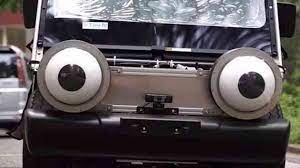
Self-driving cars has a recent study at the University of Tokyo suggests that robotic eyes on autonomous vehicles could increase pedestrian safety. In virtual reality (VR) games, participants had to choose whether or not to cross a road in front of a moving vehicle. The participants were able to make safer or more effective decisions when the vehicle was equipped with robotic eyes that either stared at the pedestrian (registering their existence) or away (not registering them).
Autonomous vehicles appear to be coming soon.
A lot of study is being done to bring a once-futuristic idea to life, whether they will be used for package delivery, preparing fields for planting, or transporting children to school.
Researchers at the University of Tokyo have focused on a more “human” concern of self-driving technology, whereas the practical aspects of building vehicles that can independently navigate the world are the main focus for many.
“The interactions of self-driving automobiles with nearby people, such as pedestrians, have not received adequate research.
So, in order to provide society with safety and assurance regarding self-driving automobiles, additional research and effort into such interaction is required “the Graduate School of Information Science and Technology’s Professor Takeo Igarashi remarked
One significant distinction with self-driving cars is that either no one is behind the wheel at all or the driver may become more of a passenger and not pay full attention to the road. This makes it challenging for pedestrians to determine whether a car has noticed them or not because there may not be any eye contact or other cues from those inside.
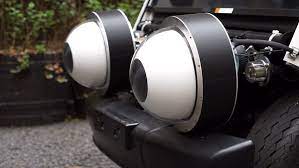
So how might pedestrians be alerted when a self-driving car sees them and is going to stop? A self-driving golf cart was outfitted with two sizable, remote-controlled robotic eyes, just like a character from the Pixar film Cars. The “gazing automobile” was what the researchers called it. In this scenario, they were testing whether individuals would still cross the road in front of a moving vehicle when pressed for time if moving eyes were placed on the cart.
The group created two situations with the cart having eyes and two without. Either the cart had seen the pedestrian and was going to halt, or it had not seen them and was continuing to go. When the cart had eyes, they would either be staring at the pedestrian and about to halt or they would be looking somewhere else (not going to stop).
Since it would be obviously dangerous to ask participants to decide whether or not to walk in front of a moving vehicle in real life (though there was a hidden driver for this experiment), the team recorded the scenarios using 360-degree video cameras, and the 18 participants (nine women and nine men, aged 18 to 49, all Japanese) experienced the experiment in virtual reality. They were given three seconds each time to select whether or not they would cross the road in front of the cart after going through the situations many times in a random order. When they crossed or stopped when they could have crossed, the researchers recorded their decisions and calculated the error rates of those choices they ought to have waited when.
Project Lecturer Chia-Ming Chang, a part of the research team, said that the findings “indicated a clear disparity between genders, which was really surprising and unexpected.” Although age and background may also have had an impact on the participants’ reactions, we think this is a crucial point because it demonstrates that different road users may have different needs and behaviors, necessitating the need for various communication methods in the self-driving world of the future.
“The male participants in this study frequently made risky road-crossing decisions (i.e., decided to cross while the car was not stopping), but these mistakes were curbed by the cart’s stare. In terms of safe circumstances for them, such as selecting to cross when the car was about to stop, there was little difference “Chang explained it.
“The eye contact from the cart, on the other hand, helped the female participants make less bad decisions (like deciding not to cross when the car was going to stop). There was little difference in their dangerous circumstances, though.” In the end, the trial demonstrated that the eyeballs made everyone’s crossing easier or safer.
But how did the individuals feel after seeing the eyes? While some people found them to be cute, others found them to be spooky or frightening. Many of the male participants said they felt the situation was more dangerous when the eyes were turned away. Many of the female participants reported feeling safer when the eyes glanced at them.
“In this particular study, we concentrated on eye movement but did not pay too much attention to visual design. Due to financial restrictions, we only constructed the simplest one possible. Igarashi explained this decision. It would be preferable in the future to have a qualified product designer select the best design, although it would probably still be challenging to please everyone.Personally, I enjoy it. It’s kind of adorable.
The researchers is aware that the small number of participants acting out just one scenario limits this study. Additionally, it’s probable that decisions made in virtual reality differ from those made in the actual world. However, “It is a significant transition to switch from manual to automatic driving. We should give additional eyeballs considerable consideration if they can truly improve safety and lower traffic accidents. We hope to create automatic control for the robotic eyes connected to self-driving AI in the future (as opposed to manual control), which could adapt to various conditions “Igarashi remarked. “I hope that this research inspires other organizations to test out related concepts, anything that enables improved interaction between autonomous vehicles and pedestrians, which ultimately saves lives.”
The research was released in the 14th International Conference on Automotive User Interfaces and Interactive Vehicular Applications Proceedings.
This is a great question. So what do you think about this question, If adding eyes to self-driving cars’ reduce accidents? you can drop your comment in the comment section.