A Product Description in E-commerce (And Why It Matters More Than You Think)
At its core, a product description explains what a product is and why someone should buy it—something AI product description generation now helps brands do at scale.
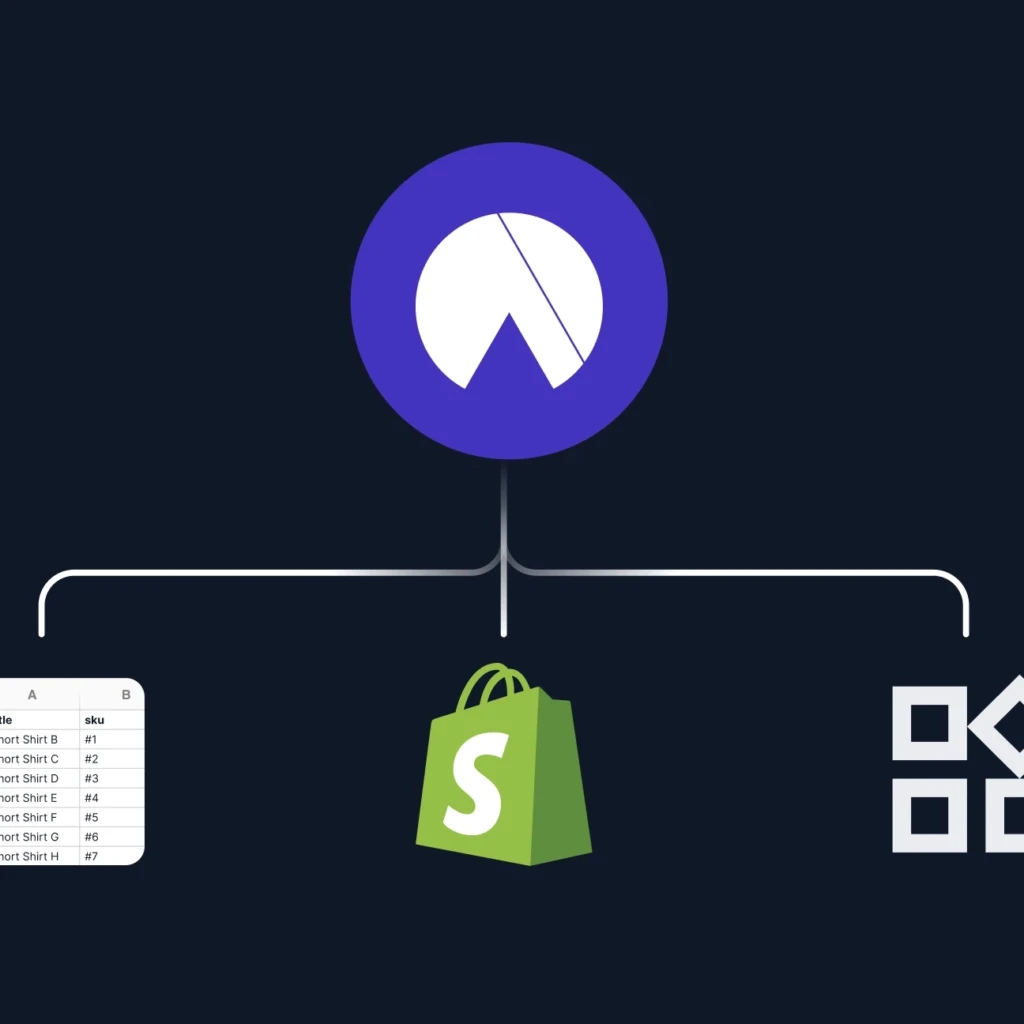
In Large-scale e-commerce, that definition is incomplete.
A product description is also:
- A search engine entry point
- A conversion tool
- A brand positioning signal
- A data asset
For stores with thousands of SKUs, descriptions aren’t just content—they’re infrastructure.
Poor descriptions lead to:
- Duplicate content penalties
- Low click-through rates
- Confused buyers
- High bounce rates
Great descriptions, on the other hand:
- Capture long-tail search traffic
- Improve on-page SEO
- Reduce customer hesitation
- Increase conversion rates
And when you’re operating at scale, even a 1% improvement per product compounds massively.
The Core Problem: Why Manual Product Descriptions Don’t Scale

Most e-commerce teams start the same way:
- Hire writers
- Create templates
- Try to “keep things consistent”
This works… until it doesn’t.
Here’s why manual writing collapses at scale:
- Time explosion: Writing 100 descriptions is manageable. Writing 10,000 is not.
- Inconsistency: Different writers, different tones, different structures.
- SEO dilution: Missed keyword opportunities across similar SKUs.
- Maintenance nightmare: Updating specs means rewriting content manually.
At scale, manual workflows become a bottleneck instead of an asset.
This is exactly why automation became inevitable.
The Shift: From Static Copy to Dynamic Product Descriptions

Dynamic product descriptions are not just “AI-written text.”
They are data-driven content systems.
Instead of writing one description per product, you create:
- Rules
- Templates
- Variables
- Logic layers
Then descriptions are generated dynamically based on:
- Product attributes
- Category context
- Target keywords
- Brand tone rules
Think of it like this:
Manual copywriting is painting each brick by hand.
Dynamic generation is designing the mold that builds the entire wall.
Search Intent Breakdown: What People Are Really Asking
When people search around this topic, their intent falls into four main buckets.
1. Foundational Intent
People want clarity:
- What is a product description in e-commerce?
- What elements should it include?
- What makes an e-commerce website successful?
2. Process & Systems Intent
They’re asking:
- How do I design and develop scalable e-commerce systems?
- How do platforms handle thousands of products?
- How do dynamic descriptions actually work?
3. Automation & Tooling Intent
This is where urgency shows:
- How can I automate product descriptions?
- What software supports large catalogs?
- Can AI handle SEO safely?
4. Optimization & Growth Intent
These searches focus on outcomes:
- How do dynamic descriptions improve SEO?
- Can they increase conversions?
- Do they help with long-tail keywords?
A good article—and a good system—must answer all four.
The Anatomy of a Dynamic Product Description System

Let’s get practical.
A scalable system typically has five core layers.
1. Structured Product Data (The Foundation)
Everything starts with clean data.
Dynamic descriptions rely on:
- Product title
- Attributes (size, color, material, specs)
- Category hierarchy
- Use cases
- Unique selling points
If your data is messy, your descriptions will be messy too.
This is why high-performing stores treat product data as content, not just inventory.
2. Modular Templates (The Skeleton)
Instead of writing full paragraphs, you write modules.
For example:
- Intro paragraph template
- Feature explanation block
- Benefit-focused block
- Use-case paragraph
- SEO-friendly closing
Each module adapts based on variables.
This allows:
- Consistent structure
- Controlled variation
- Brand voice enforcement
3. SEO Logic & Keyword Mapping
This is where most people fail.
Dynamic descriptions must be search-aware.
That means:
- Mapping primary and secondary keywords per category
- Using variations to avoid duplication
- Inserting long-tail modifiers naturally
For example:
- “Men’s running shoes for flat feet”
- “Lightweight trail running shoes for beginners”
Dynamic systems allow you to capture thousands of long-tail queries without manually writing for each.
4. AI or Rule-Based Generation Engine
At scale, this layer does the heavy lifting.
Depending on your setup, this could be:
- AI-powered natural language generation
- Rule-based text assembly
- Hybrid systems combining both
The key is control.
Good systems don’t just “let AI write.”
They:
- Define tone boundaries
- Restrict phrasing
- Enforce SEO constraints
- Prevent hallucinations
5. Quality Control & Feedback Loops
Automation doesn’t mean “set and forget.”
You still need:
- Spot checks
- SEO performance tracking
- Conversion data feedback
- Ongoing refinement
The best teams treat dynamic descriptions as living systems, not static outputs.
Key Elements Every Dynamic Product Description Should Include
Regardless of scale, successful descriptions consistently include:
- Clear product identification
- Customer-centric benefits
- Feature-to-benefit translation
- Use-case clarity
- Search-friendly language
- Brand-consistent tone
The difference at scale is how these elements are generated—not whether they exist.
Writer’s Insight: Why Most AI Product Descriptions Fail
Here’s a contrarian observation I’ve noticed.
Most e-commerce brands don’t fail with AI because the technology is bad.
They fail because they treat AI like a writer, not a system.
AI is not your copywriter.
AI is your content engine.
When brands:
- Skip data structuring
- Ignore keyword intent
- Don’t define voice rules
They get generic, robotic descriptions that hurt trust.
But when AI is used inside a well-designed pipeline, the results are often better than manual writing—especially at scale.
The magic isn’t the AI.
It’s the architecture around it.
How Dynamic Descriptions Improve SEO at Scale
From an SEO perspective, dynamic descriptions unlock three major advantages.
1. Long-Tail Keyword Domination
Manually, you might target:
- “Wireless headphones”
Dynamically, you target:
- “Noise-canceling wireless headphones for travel”
- “Wireless headphones with long battery life”
- “Bluetooth headphones for gym workouts”
Each SKU becomes a landing page for a specific intent.
2. Reduced Duplicate Content
Dynamic variation prevents:
- Copy-paste descriptions
- Manufacturer duplicate content
- Thin pages
Search engines reward intent-matched uniqueness, not just originality for its own sake.
3. Faster Content Deployment
New products go live with:
- Optimized descriptions
- Proper formatting
- SEO-ready structure
No waiting for writers. No backlog.
Platform Considerations: Where This Works Best
Dynamic descriptions integrate most easily with:
- Shopify (via apps or APIs)
- WooCommerce
- Magento
- Headless commerce setups
The more flexible your backend, the more powerful your system can be.
Common Mistakes to Avoid
Even smart teams make these errors:
- Over-automation without review
- Ignoring brand tone
- Keyword stuffing
- Using one template across unrelated categories
- Forgetting conversion psychology
Automation should amplify strategy—not replace it.
The Future: Where Dynamic Product Descriptions Are Headed
We’re moving toward:
- Personalized descriptions per user segment
- Real-time adaptation based on browsing behavior
- Multilingual dynamic generation
- Voice-search-optimized product content
In other words, descriptions won’t just describe products.
They’ll respond to the customer.
Conclusion: The Real Advantage Isn’t Speed—It’s Leverage
Generating dynamic product descriptions for e-commerce sites with thousands of SKUs isn’t just about saving time.
It’s about leverage.
When done correctly, automation allows you to:
- Scale content without sacrificing quality
- Capture search demand competitors miss
- Maintain brand consistency across massive catalogs
- Turn product data into a growth asset
Manual copywriting built early e-commerce.
Dynamic systems are building the future.
The brands that win won’t be the ones writing faster—but the ones designing smarter systems.
FAQs
FAQ 1: What is a dynamic product description?
A dynamic product description is automatically generated using structured data and templates, and AI product description generation makes this process faster, scalable, and optimized for SEO.
Are AI-generated product descriptions bad for SEO?
No. When done correctly, AI product description generation improves SEO by creating unique, keyword-optimized content at scale, avoiding duplication and boosting search visibility.
FAQ 3: Can small e-commerce stores use dynamic descriptions?
Yes. Even stores with a few hundred SKUs benefit from automation as they grow.
FAQ 4: How do I maintain brand voice with automation?
By defining tone rules, approved phrases, and structural templates that guide generation.
Do dynamic descriptions increase conversion rates?
Yes. When implemented correctly, AI product description generation can improve conversion rates by creating consistent, persuasive, and SEO-optimized content that aligns with customer intent across thousands of SKUs.