Introduction: Who Really Decides Where Water Goes?

If you’ve ever wondered who decides how much water a city, farm, or industry gets, you’re asking one of the most searched yet least understood questions in modern resource management. Water rights allocation often feels like a black box. Decisions are made behind legal frameworks, political pressure, climate uncertainty, and decades-old agreements that no longer reflect reality.
Here’s the uncomfortable truth. Traditional water allocation systems were built for a stable climate and predictable demand. We no longer live in that world. Droughts are longer, populations are larger, and competition for water is sharper than ever.
This is where predictive AI modeling quietly enters the scene. Not as a silver bullet, but as something more subtle. A translator. A pattern reader. Almost a whisperer, helping policymakers, utilities, and communities hear what the data has been trying to say all along.
This article explores how AI is reshaping water rights allocation, not by replacing human judgment, but by making it smarter, fairer, and more resilient.
Why Water Rights Are So Complicated to Begin With
Water law was never designed for uncertainty
Most water rights systems are rooted in historical use. First in time, first in right. Beneficial use doctrines. Fixed allocations based on past flows. These models assume water behaves predictably.
It doesn’t.
Climate variability, upstream development, and shifting consumption patterns have broken the assumptions these systems rely on. What used to be “fair” is now frequently contested.

The Growing Pressure on Water Allocation Systems
Demand is rising while supply is shrinking
Water scarcity is no longer a future problem. It’s a present constraint.
Key pressures include:
- Urban population growth
- Agricultural intensification
- Industrial and energy demands
- Climate-driven droughts and floods
Allocating water today requires balancing economic survival, environmental protection, and human rights, often with incomplete information.
Enter Predictive AI Modeling
What predictive AI actually does in water management
Predictive AI modeling uses historical data, real-time inputs, and machine learning algorithms to forecast future water availability and demand.
Unlike static models, AI systems learn over time. They detect patterns humans miss and simulate scenarios that would take years to analyze manually.
In water rights management, this means:
- Forecasting shortages before they happen
- Evaluating allocation trade-offs
- Stress-testing policy decisions
From Reactive to Proactive Water Governance
Why prediction changes everything
Traditional water management reacts after a crisis. Reservoirs drop. Crops fail. Restrictions are imposed.
Predictive AI flips the timeline.
By modeling rainfall, snowpack, soil moisture, and usage trends, decision-makers can act earlier, softer, and more strategically.
Prevention is gentler than correction. That’s a quiet but powerful shift.

How AI Models Handle Complex Allocations
Multiple users, competing priorities
Water rights allocation isn’t a single equation. It’s a web.
AI models can incorporate:
- Legal entitlements
- Environmental flow requirements
- Economic impact data
- Social equity considerations
Instead of choosing one outcome, models generate scenario ranges, showing who gains, who loses, and why.
This transparency changes negotiations.
AI as a Neutral Mediator in Water Disputes
Data doesn’t take sides
Water conflicts are emotional. Farmers, cities, and ecosystems all have legitimate claims.
Predictive AI doesn’t eliminate conflict, but it reframes it. When stakeholders see the same projections and assumptions, conversations move from blame to trade-offs.
AI becomes a neutral third party, not a decision-maker, but a truth-teller.
Integrating Climate Uncertainty into Allocation Decisions
Planning for what we don’t know
One of AI’s biggest advantages is handling uncertainty.
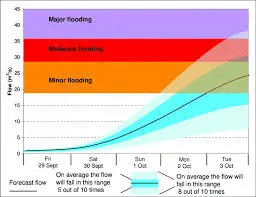
Rather than relying on single forecasts, AI models:
- Simulate multiple climate futures
- Adjust probabilities dynamically
- Highlight risk thresholds
This allows water managers to design flexible allocations that adapt as conditions change, rather than collapsing under stress.
Equity and Ethics in AI-Driven Water Rights
Algorithms reflect human values
AI is not inherently fair. It reflects the data and assumptions it’s given.
If historical allocations favored certain groups, models trained on that data can reinforce inequality. This is where human oversight matters.
Ethical AI in water governance requires:
- Transparent assumptions
- Diverse stakeholder input
- Continuous auditing
The goal isn’t efficiency alone. It’s legitimacy.
Case Applications: Where Predictive AI Is Already Working
Agricultural water optimization
AI models help irrigation districts forecast seasonal demand, allowing smarter distribution without blanket restrictions.
Farmers benefit from predictability. Ecosystems benefit from preserved flows.
Urban water planning
Cities use predictive analytics to anticipate shortages years in advance, spreading conservation efforts gradually instead of imposing sudden cuts.
Environmental Flows and Ecosystem Protection
Giving nature a seat at the table
Rivers, wetlands, and aquifers don’t have lawyers, but AI can model their needs.
Predictive tools quantify:
- Minimum ecological flows
- Habitat stress thresholds
- Long-term degradation risks
This data strengthens environmental protections in allocation negotiations.
Why Human Judgment Still Matters

AI informs, humans decide
Predictive AI doesn’t replace water managers. It augments them.
Humans interpret context. They understand political realities, cultural values, and legal nuance. AI provides clarity, not authority.
The best systems are collaborative. Machine insight paired with human wisdom.
Barriers to Adoption
Why not everyone is using AI yet
Despite its promise, predictive AI faces challenges:
- Data quality and availability
- High initial costs
- Institutional resistance
- Trust issues
Many agencies still rely on familiar tools, even when they underperform.
The Future of Water Rights Allocation
From rigid rules to adaptive systems
The long-term shift is clear. Water governance is moving toward adaptive, data-driven frameworks.
Predictive AI enables:
- Dynamic allocations
- Continuous monitoring
- Early conflict detection
The whisperer becomes a guide, helping societies navigate uncertainty with foresight instead of fear.
Conclusion: Listening to the Water
Water has always followed patterns. We just lacked the tools to hear them clearly.
Predictive AI modeling doesn’t simplify water rights. It reveals their complexity honestly. It replaces guesswork with insight and reaction with preparation.
In a world where water scarcity defines our future, the smartest systems won’t shout commands. They’ll listen carefully, interpret wisely, and act early.
That’s the quiet power of the water rights whisperer.
FAQs
What is predictive AI modeling in water management?
It uses machine learning and data analytics to forecast water availability, demand, and risks, supporting smarter allocation decisions.
Can AI replace traditional water rights systems?
No. It complements existing legal frameworks by providing better data and scenario analysis.
Is AI fair in water allocation decisions?
It can be, but only with transparent design, ethical oversight, and inclusive data inputs.
How accurate are AI water predictions?
Accuracy improves over time as models learn, but predictions are probabilistic, not guarantees.
Who benefits most from AI-driven water management?
Communities facing scarcity, policymakers managing risk, and ecosystems needing protection all benefit.