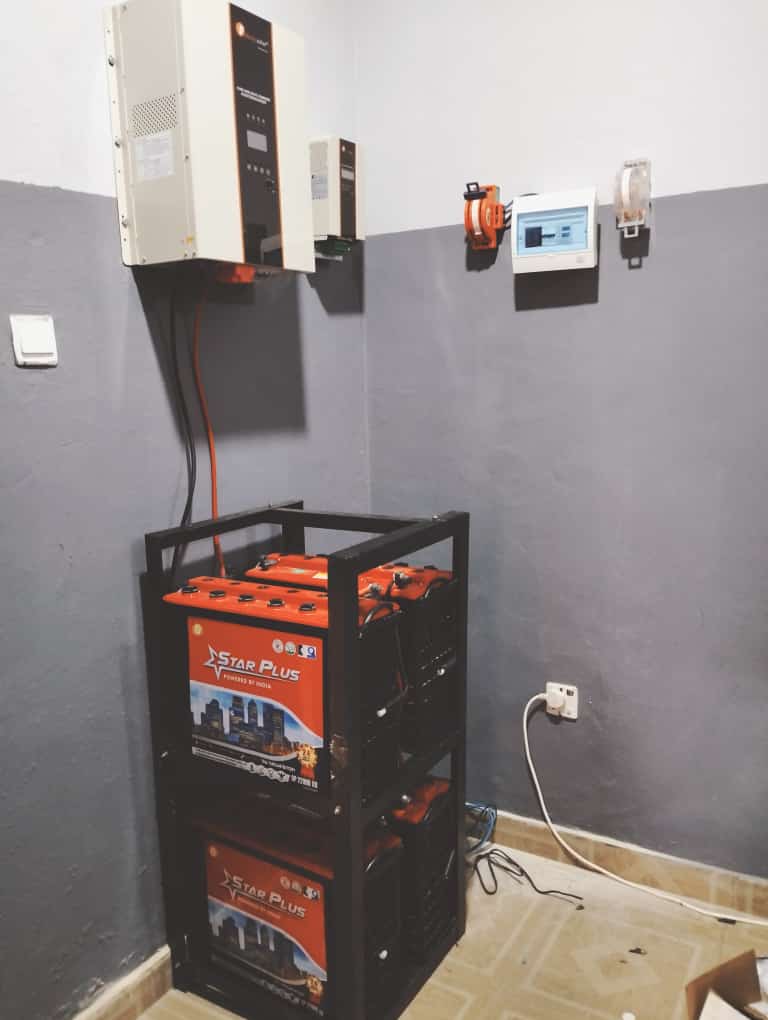
Power supply can be unpredictable in many parts of Nigeria. As a result, more homeowners are considering solar energy to keep essential appliances running, reduce generator use, and manage electricity costs. However, choosing the right system requires more than simply buying an inverter and a few solar panels.
If you are wondering how to size a solar system for a home, the answer depends on your daily electricity consumption, the appliances you want to power, your required backup time, and the amount of sunlight available at your location.
This guide explains how to calculate your inverter capacity, battery storage, and solar panel requirements so you can plan a system that suits your household.
1. Calculate Your Home’s Daily Electricity Consumption
The first step in learning how to size a solar system for a home is understanding how much electricity you use. Without this information, you could buy an undersized system that struggles to power your appliances or an unnecessarily expensive one.
Start by listing the appliances you want your solar system to support. Record each appliance’s wattage and estimate how many hours you use it daily.
For example:
| Appliance | Power rating | Daily use | Energy used |
|---|---|---|---|
| LED bulbs | 60W total | 6 hours | 360Wh |
| Television | 100W | 5 hours | 500Wh |
| Fan | 75W | 8 hours | 600Wh |
| Laptop | 65W | 4 hours | 260Wh |
| Router | 15W | 10 hours | 150Wh |
| Total | 1,870Wh |
To calculate energy consumption, multiply an appliance’s power rating by its daily operating hours.
Energy consumed (Wh) = Power (W) × Usage (hours)
In this example, the listed appliances consume approximately 1.87kWh daily. Therefore, you would need to size your solar system around this energy demand, while allowing for conversion losses and additional needs.
Keep in mind that refrigerators, water pumps, pressing irons, and air conditioners can significantly increase electricity consumption. Include them if you intend to run them on solar power.
2. Choose the Right Solar Inverter Size
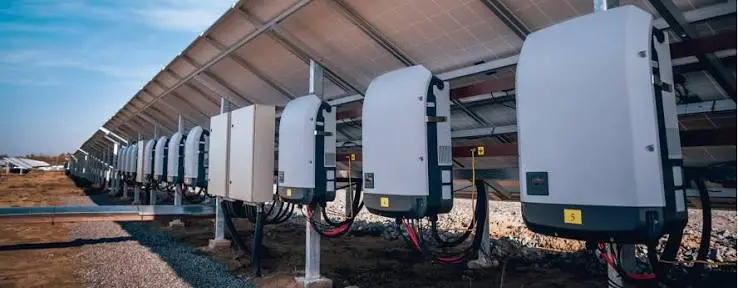
The inverter converts electricity from your battery into usable AC power for household appliances. Its capacity determines how much equipment you can operate simultaneously.
To calculate the appropriate solar inverter size, add the wattage of the appliances that may run at the same time. Then allow some extra capacity for starting surges and future needs.
For instance, if your appliances could draw 800W simultaneously, an inverter with a suitable continuous output above that figure may work. A 1.5kVA or 2kVA inverter could be worth considering, depending on its actual watt rating, power factor, surge capability, and the appliances involved.
However, do not choose an inverter based on kVA alone. Check its rated output in watts and whether it can handle motor-driven equipment such as refrigerators and pumps.
Furthermore, a larger inverter does not automatically provide longer backup time. Battery capacity determines how much energy is stored, while inverter capacity determines how much power can be supplied at once.
3. Calculate the Battery Capacity You Need
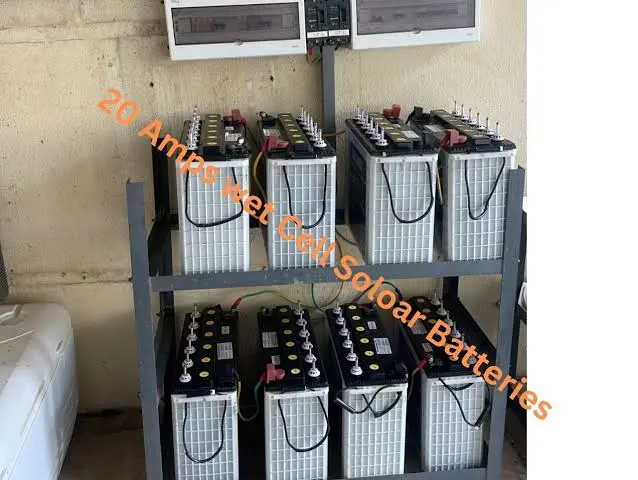
Battery storage is especially important in Nigeria because your system may need to supply electricity at night or during prolonged cloudy weather.
To estimate battery capacity, consider your daily energy consumption, the number of hours you need backup, the battery’s recommended depth of discharge, and inverter efficiency.
A simplified formula is:
Battery capacity (Wh) = Required energy (Wh) ÷ (Depth of discharge × Inverter efficiency)
Suppose your household needs 1.5kWh of usable AC electricity daily, and you want enough storage for two similar days without meaningful solar charging. If your battery has an 80% usable depth of discharge and inverter efficiency is 90%, the estimate is:
1,500Wh × 2 ÷ (0.80 × 0.90) = approximately 4,167Wh.
You would therefore look at roughly 4.2kWh of nominal battery storage or more, subject to the manufacturer’s specifications and system design.
Lithium batteries often allow a greater usable proportion of their rated capacity than some lead-acid batteries. Nevertheless, compare the manufacturer’s recommended operating limits, cycle life, warranty, and cost before buying.
Also, remember that a battery’s voltage and amp-hour rating determine its energy capacity. For example, a nominal 48V, 100Ah battery stores approximately 4.8kWh before accounting for usable-capacity limits and conversion losses.
4. Determine How Many Solar Panels You Need
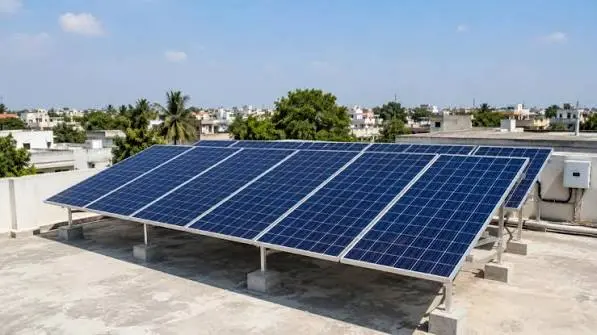
Solar panels generate the electricity used by your appliances and recharge your batteries. Their required capacity depends on daily energy demand, local sunlight conditions, and losses caused by heat, wiring, dust, and equipment.
A useful starting formula is:
Solar panel capacity (W) = Daily energy demand (Wh) ÷ (Peak sun hours × System efficiency)
Suppose your household needs 1,870Wh daily. For illustration, assume an average of 4.5 peak sun hours per day and an overall system efficiency factor of 75%.
1,870Wh ÷ (4.5 × 0.75) = approximately 554W.
This is a mathematical starting estimate, not a guarantee of daily production. In practice, you might consider a panel array around 600W or larger, depending on seasonal sunlight, battery-recharging requirements, shading, and additional loads.
For example, two 350W panels provide a combined rated capacity of 700W. Actual output will vary with sunlight, panel temperature, orientation, and installation conditions.
Consequently, do not size your panels using wattage alone. A qualified installer should assess the location and ensure the array can meet your energy needs throughout the year, including less sunny periods.
5. Match Your Solar Components Properly
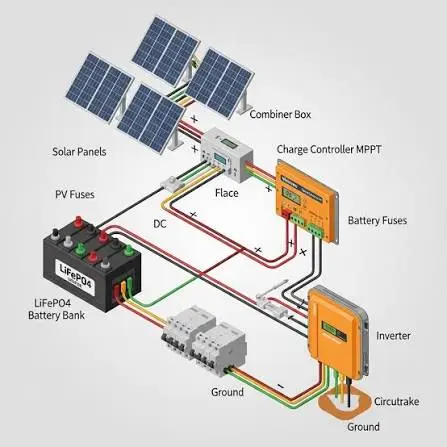
Even when your calculations look correct, the components must work together safely and efficiently.
Your solar inverter should support the battery’s voltage and chemistry. The battery management system, where applicable, must also be compatible with the inverter’s charging and discharge settings.
In addition, the solar charge controller must support the array’s voltage and current. If the inverter has a built-in controller, check its maximum photovoltaic input capacity and permitted panel configuration.
Proper protection is equally important. Depending on the design, the installation may require appropriately rated breakers, fuses, isolators, surge protection, earthing, and correctly sized cables.
Therefore, avoid connecting components simply because their advertised capacities appear compatible. Have a qualified solar installer check the electrical specifications, protection devices, and applicable local requirements before installation.
6. Consider Your Budget and Future Electricity Needs
The cheapest solar setup is not always the most economical option over time. A system that cannot run your essential appliances may lead to additional spending on replacement batteries, extra panels, or another inverter.
Before purchasing, separate essential loads from optional ones. For example, you might prioritise lighting, fans, internet access, and a television before adding an air conditioner or electric cooking appliance.
Furthermore, decide whether you need backup for a few evening hours or extended periods without grid electricity. That decision can substantially change the battery capacity and overall cost.
If your budget is limited, start with the loads that matter most and design the system around them. However, plan for expansion where possible by checking inverter capacity, charge-controller limits, and battery compatibility.
Finally, compare written quotations from reputable installers. Ask each provider to specify the panel wattage, inverter rating, usable battery capacity, warranties, installation costs, and expected performance assumptions.
Conclusion
Understanding how to size a solar system for a home helps you make a more informed investment in reliable electricity. Start by calculating daily energy consumption, select an inverter that can handle simultaneous loads, determine the battery capacity needed for your backup requirements, and estimate the solar panel array required to replenish your energy use.
Most importantly, treat online calculations as planning estimates rather than a substitute for a site assessment. Your household’s appliance usage, local weather, shading, and equipment specifications all affect the final design.
With careful planning and compatible components, you can build a solar system that meets your needs without paying for unnecessary capacity.
Planning a solar installation in Nigeria? Prepare a list of your appliances, their wattage, and daily operating hours before requesting a quotation. This will help your installer recommend a system based on your actual electricity needs rather than guesswork.