Introduction: Why Do Frost Warnings Still Miss the Damage?
If weather apps can predict storms days ahead, why do farmers still wake up to frost-damaged crops without warning? That question sits at the heart of one of agriculture’s most frustrating problems: micro-frost events.
My unique angle is this: frost isn’t just a weather problem—it’s a data resolution problem. The Frost Sentinel approach shows how low-cost sensor networks and AI can finally detect the tiny, local conditions that traditional forecasts overlook.
What Micro-Frost Events Really Are
Frost Isn’t Uniform
Frost doesn’t blanket a field evenly. It settles into low spots, hugs shaded areas, and forms differently around soil types.
These localized temperature drops, often just a few degrees below freezing, are what we call micro-frost events.
Why Forecasts Struggle
Most weather stations sit kilometers apart. That spacing misses temperature variations that occur over just a few meters.
For crops, those few meters make all the difference.
The Real Cost of Missed Frost
Damage Happens Fast
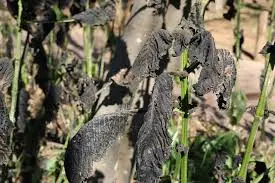
A single frost event can wipe out blossoms, burn leaves, and halt growth within minutes.
By the time damage is visible, it’s already too late.
Why Farmers Need Precision
Overreacting costs money. Underreacting costs harvests.
What farmers really need is timely, location-specific alerts, not generalized warnings.
The Frost Sentinel Concept Explained
A Network, Not a Single Sensor
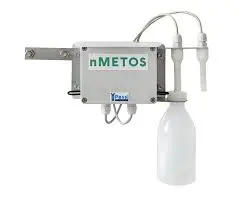
The Frost Sentinel isn’t one device. It’s a distributed network of low-cost temperature and humidity sensors placed across a field.
Each sensor captures micro-climate data where crops actually grow.
Why Low-Cost Matters
Affordable sensors allow:
- Dense coverage
- Easy replacement
- Scalable deployment
More sensors mean better resolution.
How AI Turns Raw Data Into Warnings
Patterns Humans Can’t See
AI models analyze thousands of temperature shifts, humidity changes, and historical frost patterns.
Subtle trends emerge long before temperatures hit freezing.
Prediction, Not Reaction
Instead of sounding alarms after frost starts, the system predicts when and where it’s likely to form.
That time advantage is critical.
Why Micro-Frost Is About More Than Temperature
The Role of Humidity and Wind
Still air and high humidity create perfect frost conditions, even when temperatures hover just above zero.
AI models factor in these interactions automatically.
Terrain and Crop Canopy Effects
Slope, vegetation density, and soil moisture all influence frost formation.
This complexity is exactly where AI excels.
Deployment in Real Farming Environments
Simple Installation
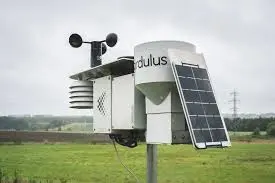
Sensors mount on stakes or existing structures, requiring no major infrastructure changes.
Farmers can deploy them in hours, not weeks.
Connectivity Without Complexity
Data transmits wirelessly to a central system, even in low-bandwidth rural environments.
The system is designed for reliability, not tech overload.
Actionable Alerts That Matter
From Data to Decisions
When risk rises, farmers receive alerts that answer a simple question: What should I do right now?
Common responses include:
- Activating frost fans
- Deploying covers
- Adjusting irrigation timing
The alert isn’t noise—it’s guidance.
Economic Impact of Early Detection
Preventing Loss Beats Recovery
Avoiding a single frost event can pay for the system many times over.
The value lies in prevention, not post-damage analysis.
Reducing Unnecessary Interventions
By pinpointing risk areas, farmers avoid blanket actions across entire fields.
Precision saves energy and labor.
Environmental Benefits
Smarter Resource Use
Targeted frost protection means less fuel, less water, and fewer emissions.
Efficiency becomes sustainability.
Climate Adaptation in Action
As weather grows less predictable, micro-frost prediction becomes a key adaptation tool.
Challenges and Limitations
Sensors Still Need Context
No system is perfect. Sensor placement matters, and AI improves with time and data.
Early-season calibration remains essential.
Human Judgment Still Counts
The Frost Sentinel supports decisions—it doesn’t replace experience.
Farmers remain the final authority.
Why This Approach Is a Turning Point
From Forecasting to Sensing
Traditional weather prediction looks at the sky. Frost Sentinel listens to the ground.
That shift changes everything.
Democratizing Precision Agriculture
Low-cost design makes advanced frost prediction accessible to small and mid-sized farms.
Innovation no longer belongs only to large operations.
Conclusion
Micro-frost events have always been local, fast, and destructive. What’s new is our ability to see them coming.
By combining dense sensor networks with AI, the Frost Sentinel transforms frost from an unpredictable threat into a manageable risk.
The powerful takeaway is this: when data meets the ground, farmers gain time—and time saves crops.
FAQs
What makes micro-frost different from regular frost?
Micro-frost occurs in small, localized areas that standard weather stations can’t detect.
Are low-cost sensors accurate enough?
Yes. When used in dense networks, accuracy improves through pattern analysis rather than single readings.
How early can Frost Sentinel predict frost?
In many cases, hours before temperatures reach freezing levels.
Does this work for all crops?
It’s especially valuable for frost-sensitive crops like fruit trees, vines, and early vegetables.
Is AI required for frost prediction?
For micro-frost events, yes. The complexity and speed exceed human pattern recognition.