Introduction: Why Is Everyone Talking About AI That “Acts on Its Own”?
For a long time, using AI meant writing the perfect prompt and hoping for a useful response. One wrong phrase, and the output missed the mark. Recently, however, a new idea has taken center stage: What if AI didn’t wait for instructions at all?
This question defines agentic AI. Instead of reacting to commands, agentic systems understand goals, make plans, and take action. The shift from prompts to intent marks a fundamental change in how work gets done—and how humans interact with technology.
What Is Agentic AI?
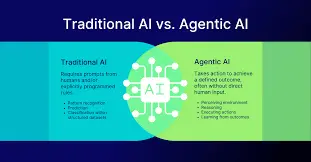
Agentic AI refers to systems that can pursue objectives independently. Rather than producing one-off answers, these systems:
- Interpret goals
- Break them into steps
- Execute actions
- Adjust based on feedback
In simple terms, agentic AI behaves less like a tool and more like a collaborator.
Why Prompt-Based AI Hit Its Limits
Prompt-driven AI tools are powerful, but they place a heavy burden on users. You need to know how to ask the right question, structure inputs correctly, and manually connect outputs.
Over time, this created friction. People didn’t want to manage AI—they wanted results. Agentic AI removes that barrier by allowing humans to focus on what needs to happen, not how to make it happen.
How Intent Replaces Prompts
A prompt is a single instruction. Intent is a desired outcome with context. Agentic AI systems understand intent by combining language understanding, memory, and decision-making logic.
Once a goal is set, the system plans its next steps, takes action, and evaluates results. This feedback loop continues until the objective is reached or human input is needed.
Where Agentic AI Shows Up in Everyday Work
Agentic AI is already influencing daily workflows in subtle but meaningful ways.
In offices, it manages emails, schedules meetings, and tracks action items without constant supervision. In software development, agentic coding agents identify bugs, suggest fixes, and test solutions. In marketing, these systems research topics, generate content, and monitor performance as part of an ongoing process.
The common thread is continuity. Work no longer happens in isolated tasks—it flows.
Productivity Is Being Redefined

Traditional productivity focuses on tasks completed. Agentic AI shifts attention to outcomes achieved. Instead of measuring effort, teams measure impact.
Another major benefit is reduced cognitive load. By handling small decisions and routine actions, agentic AI frees people to focus on strategy, creativity, and problem-solving.
Can We Trust Agentic AI?
Autonomy doesn’t mean a lack of control. Effective agentic systems operate within clear boundaries, include approval checkpoints, and allow humans to override decisions.
Trust also depends on transparency. Users need to understand why an AI system acted a certain way. When systems explain their reasoning, adoption becomes much easier.
What This Means for Jobs
Agentic AI isn’t eliminating jobs—it’s reshaping them. Repetitive task chains are automated, while human roles evolve toward oversight, judgment, and relationship-driven work.
The most valuable skill going forward isn’t task execution. It’s the ability to define meaningful goals and guide intelligent systems toward them.
Why Agentic AI Is More Than Automation
Automation follows rules. Agentic AI pursues goals. That distinction matters because goals adapt when conditions change.
This shift represents a cognitive transformation, not just a technical upgrade. Just as spreadsheets changed accounting, agentic AI is redefining workflows across industries.
Risks Worth Paying Attention To
Over-reliance on agentic systems can weaken human skills. Poorly defined goals can amplify bias. And blind trust without understanding can quickly erode confidence when systems fail.
Responsible use requires balance, oversight, and clarity.
Conclusion: The Future Belongs to Intent-Driven Work
Agentic AI changes more than how tasks are completed—it changes how responsibility is shared between humans and machines. We move from doing work ourselves to directing outcomes with clarity and purpose.
The future won’t reward those who master prompt tricks. It will reward those who know what they want to achieve and can clearly express that intent.
FAQs
What is agentic AI in simple terms?
It’s AI that can plan and act toward a goal instead of responding to single commands.
How is agentic AI different from chatbots?
Chatbots answer questions. Agentic AI manages workflows and executes multi-step tasks.
Is agentic AI safe for business use?
Yes, when designed with limits, transparency, and human oversight.
Will agentic AI replace workers?
It replaces repetitive processes, not human judgment or creativity.
What skills matter most in an agentic AI future?
Goal-setting, critical thinking, and the ability to oversee intelligent systems.